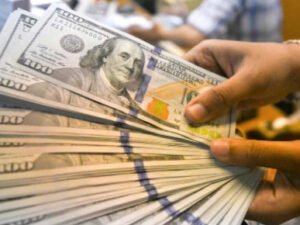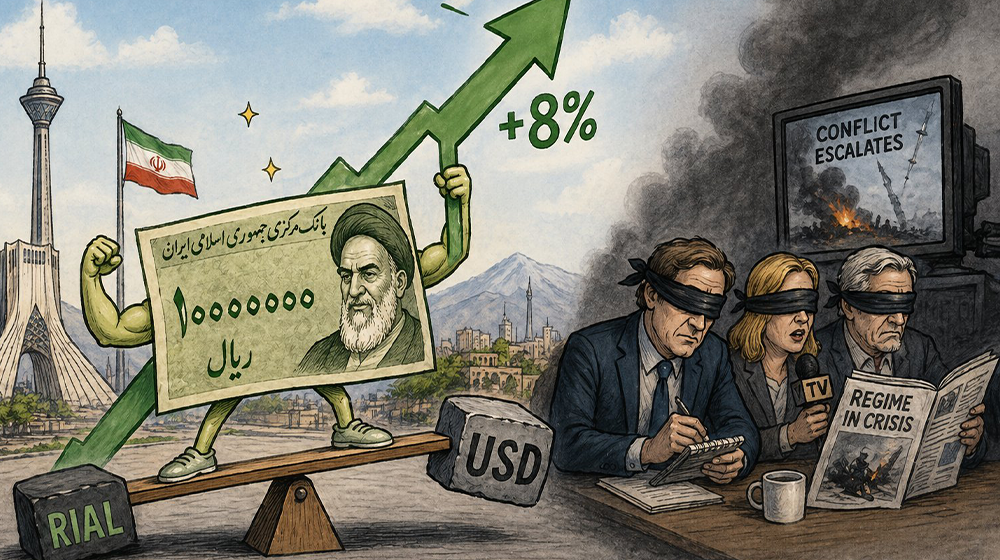
American economist and professor at Johns Hopkins University, Steve Hanke, has stirred debate after claiming that Iran’s currency strengthened against the US dollar during the ongoing conflict involving the United States, Israel, and Iran.
Posting on X, Hanke said the Iranian rial appreciated by about 8 percent against the dollar since the start of the war, adding that Western media outlets had largely ignored the development.
His remarks quickly gained attention online, particularly as conventional expectations suggest currencies typically weaken during military conflicts due to uncertainty, capital flight, and economic disruption.
Currency Movements During Conflict
Exchange rate movements in Iran are complicated by the existence of multiple currency markets, including official government rates and parallel open-market rates often used by traders and businesses. Analysts note that short-term appreciation can occur even during crises because of factors such as:
- tighter capital controls,
- reduced demand for foreign currency imports,
- emergency monetary measures by authorities,
- or temporary speculative flows.
While Hanke highlighted an appreciation trend, broader economic data paints a more mixed picture. Iran’s currency has faced long-term depreciation pressures driven by sanctions, inflation, and restricted access to global financial markets. Over recent years, the rial has repeatedly hit record lows in open trading, reflecting deep structural economic challenges.
Long-Term Economic Strain
Iran’s economy has endured years of US sanctions, high inflation, and limited foreign investment. Historical data shows the rial has generally weakened over the past decade, with exchange rates deteriorating sharply after sanctions intensified in 2018 and again during recent regional tensions.
Economic instability also fueled domestic unrest and market volatility, with businesses struggling to price goods amid rapid currency swings.
Why the Claim Matters
Hanke’s statement challenges a widely held assumption that war automatically devastates a country’s currency. Economists say exchange rates during conflict can behave counter-intuitively, especially in highly controlled economies like Iran’s, where government intervention and limited capital mobility play a large role.
Whether the rial’s reported appreciation represents a sustainable recovery or merely a temporary wartime adjustment remains unclear. Markets will likely watch inflation trends, oil revenues, sanctions enforcement, and geopolitical developments for clearer direction in the months ahead.