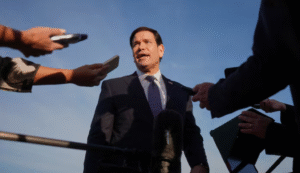




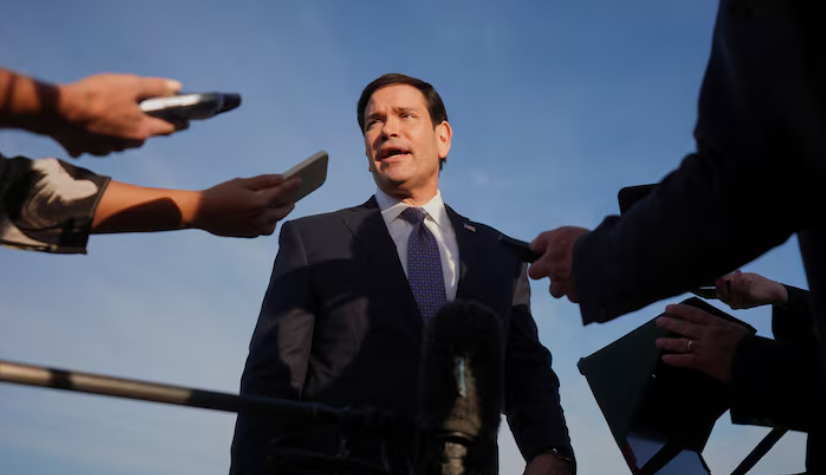
US Secretary of State Marco Rubio has acknowledged Pakistan’s concerns about terrorist attacks originating from Afghan territory, saying Washington does not want the country to face terrorism and would help if it could play a constructive role.
Rubio made the remarks on October 31 during a press availability after the G20 Foreign Ministers’ Meeting in Atlanta, Georgia, where he was asked about tensions between Pakistan and Afghanistan’s Taliban government.
The US secretary of state said Pakistan believes the Taliban have failed to prevent militant attacks being launched from Afghanistan, prompting Islamabad to take action.
What Rubio Said About Pakistan
Rubio said Washington had heard Pakistan’s concerns about attacks allegedly originating from Afghan territory.
“Pakistan is concerned about terrorist attacks that are being sponsored from the territory of Afghanistan. They feel as if the Taliban has not done enough to constrain those attacks, and they’ve taken action against it,” he said.
He added that the US did not want Pakistan to be targeted by terrorism.
Rubio also indicated that Washington could contribute to efforts to ease the situation if it saw an opportunity to make a difference.
“If there’s a productive role for us to play, we would play it,” he said, while acknowledging that the US does not have particularly close relations with the Taliban government.
He further said Washington had seen some of the attacks Pakistan had highlighted and opposed terrorism regardless of where it originated or whom it targeted.
What the US Statement Means for Pakistan
Rubio’s comments are significant because they publicly acknowledge the security concerns Islamabad has repeatedly raised about militant groups operating from Afghan territory.
Pakistan has accused the banned Tehreek-e-Taliban Pakistan (TTP) and other militant groups of using Afghanistan as a base for attacks inside the country. Islamabad has also accused the Taliban government of failing to take effective action against these groups.
However, Rubio did not announce any new US initiative, security assistance or diplomatic intervention. His offer was conditional on Washington being able to play a useful role.
The remarks therefore indicate support for Pakistan’s concerns but do not amount to a commitment by the US to intervene in the dispute.
They also come less than a week after Rubio said Washington wanted greater influence over Pakistan, suggesting that Islamabad remains an important part of the US administration’s regional calculations.
Pakistan-Afghanistan Talks Have Yet to Resolve Dispute
Several countries have attempted to reduce tensions between Islamabad and Kabul, but none has resolved the central disagreement over militant activity.
Qatar and Turkiye brokered a ceasefire in Doha last October. Follow-up negotiations in Istanbul collapsed the following month. Saudi Arabia also hosted discussions, while China held talks between the two sides in Urumqi in April this year.
Pakistan later paused Operation Ghazab lil-Haq against Afghanistan in March, but cross-border tensions continued.
Following an attack in Kohat on September 18, Pakistan carried out strikes inside Afghan territory on September 24 and October 1.
Russia has also offered to mediate if both countries request its involvement. Moscow is the only country to have formally recognised the Taliban government.
However, the Moscow Format meeting on Afghanistan on October 5 ended without a joint statement after Pakistani and Afghan representatives failed to agree on language concerning terrorist networks.
Islamabad has maintained that it remains open to negotiations but has made clear that any dialogue with Kabul will not be unconditional.