



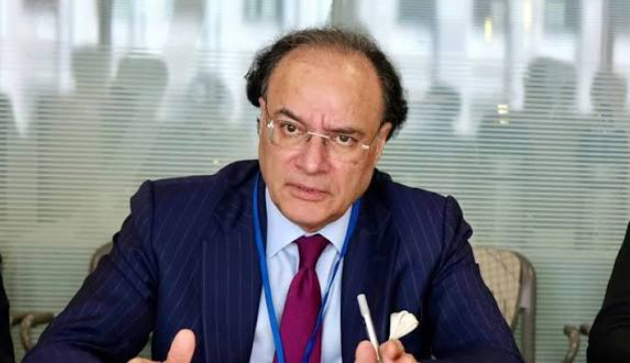
Pakistan has assumed the chairmanship of the Intergovernmental Group of Twenty-Four (G-24), with Finance Minister Muhammad Aurangzeb outlining three priorities focused on development financing, reforming global financial institutions, and giving developing countries a stronger voice in international economic decisions.
Pakistan took over the position from Nigeria, with Aurangzeb describing the responsibility as an opportunity to push for greater international cooperation on issues affecting developing economies.
In a statement issued by the Finance Division on Sunday, the minister said the global economy must give greater importance to developing countries, particularly as they face climate-related challenges, financing shortages, and growing economic divisions.
“The future of developing economies is not peripheral to the future of the global economy. It is central to it,” Aurangzeb said.
Pakistan’s Three Priorities as G-24 Chair
Aurangzeb outlined three areas that Pakistan intends to focus on during its chairmanship.
1. Making development a central economic priority
Pakistan wants global economic policies to focus more on investment, productivity, employment, and sustainable growth.
Aurangzeb said macroeconomic stability should serve as a starting point for broader economic development rather than remain an end in itself.
The objective is to help developing and low-income countries move beyond repeated financial crises and build stronger, more sustainable economies.
2. Giving developing countries a stronger voice
Pakistan will push for fairer representation of developing countries in international financial institutions, particularly the International Monetary Fund (IMF) and World Bank.
This includes greater participation in decision-making and reforms to make these institutions more responsive to the economic needs of their member countries.
3. Making international financing more accessible
The third priority involves improving access to affordable development financing, finding sustainable solutions for debt problems, strengthening global financial safety nets, and attracting more public and private investment.
Pakistan also wants greater financial support for climate resilience, particularly for developing countries facing increasing climate-related risks.
Aurangzeb said developing economies should not be held back by an international financial system that has struggled to adapt to changing global economic conditions.
What Is the G-24?
The G-24 is a group of developing countries that coordinates positions on international monetary and development finance issues, particularly in discussions involving the IMF and World Bank.
Its membership has expanded to 28 countries across Africa, Asia, the Middle East, and Latin America and the Caribbean.
Members include Brazil, India, Egypt, Nigeria, South Africa, and Sri Lanka.
The group works to strengthen developing countries’ collective influence in international financial negotiations and advocate reforms that address their economic challenges.
Aurangzeb said Pakistan would follow the group’s principles of consultation, consensus, and collective representation during its term.
The country will also work with member states, the IMF, World Bank, and other international partners to turn the group’s priorities into practical outcomes.
Why Pakistan’s G-24 Leadership Matters
The chairmanship does not immediately bring additional funding or change Pakistan’s existing financial arrangements. However, it gives the country an opportunity to help shape discussions on international lending, debt management, and development financing.
These issues are particularly important for Pakistan, which remains under a $7 billion IMF programme and recently reached a staff-level agreement with the Fund for another review, potentially unlocking approximately $1.2 billion after approval by its Executive Board.
Climate financing is another major concern. The State Bank of Pakistan has estimated that the country needs $331 billion in climate financing by 2030.
Pakistan’s priorities at the G-24 therefore overlap with some of its biggest economic challenges, including the cost of borrowing, external debt obligations, and funding for climate-related projects.
If the group manages to influence global lenders towards more affordable financing and sustainable debt arrangements, developing economies such as Pakistan could benefit over time.
However, any major changes would depend on decisions by the IMF, World Bank, and their major shareholders. The chairmanship itself does not guarantee cheaper loans, debt relief, or additional financial assistance.
Aurangzeb Says Leadership Must Deliver Results
The finance minister acknowledged Nigeria’s contribution during its chairmanship and said Pakistan would build on the progress made by its predecessor.
He stressed that the group’s success should be measured by tangible improvements rather than statements or diplomatic commitments.
Aurangzeb said Pakistan wanted to move the G-24 from collective representation towards greater influence and meaningful economic progress for developing countries.