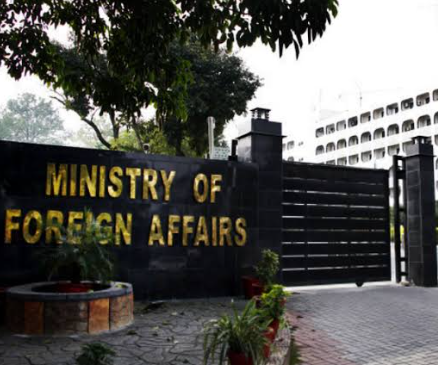
Pakistan’s Ministry of Foreign Affairs (MoFA) increased document attestation fees by up to six times without obtaining prior approval from the Finance Division, according to an audit report that has also flagged irregularities in the ministry’s contracts with private courier companies.
The Auditor General of Pakistan (AGP), in its audit report for 2025-26 covering the financial year 2024-25, questioned the ministry’s decision to revise Apostille certification charges on July 8, 2024, without following the required financial and legal procedures.
The audit also found that the ministry outsourced document collection and delivery services to five private courier companies without inviting open tenders or establishing transparent selection criteria.
Document Attestation Fees Increased Up to 6 Times
The audit found that MoFA substantially increased Apostille certification charges across personal, legal, and commercial documents.
The fee for personal documents rose from Rs. 500 to Rs. 3,000, while legal document charges increased from Rs. 700 to Rs. 4,500. Commercial document fees also jumped from Rs. 3,000 to Rs. 12,000.
| Document Type | Previous Fee | New Fee | Increase |
|---|---|---|---|
| Personal documents | Rs. 500 | Rs. 3,000 | 6 times |
| Legal documents | Rs. 700 | Rs. 4,500 | 6.4 times |
| Commercial documents | Rs. 3,000 | Rs. 12,000 | 4 times |
Why the Auditor General Flagged the Fee Hike
According to the AGP, MoFA revised the charges without first obtaining the Finance Division’s approval or publishing the new rates through an official Gazette notification.
The audit cited Rule 18 of the Financial Management and Powers of Principal Accounting Officers Regulations 2021, which requires prior consultation with the Finance Division on decisions involving financial implications, including the introduction of fees and other charges.
It also referred to Clause 4 of the Apostille Act 2024, which provides for the competent authority to determine certification fees through an official Gazette notification.
The auditors maintained that the ministry should have followed these procedures before imposing higher charges on the public.
During a meeting with the audit team on November 21, 2025, the ministry promised to provide documentary evidence of the required approval. However, it failed to submit the relevant record before the audit report was finalised.
At a Departmental Accounts Committee (DAC) meeting on December 19, 2025, MoFA argued that setting service charges fell within the authority of the competent authority under the Apostille Act 2024.
The audit rejected the explanation and maintained its objection. The DAC subsequently directed the ministry to consult the Finance Division and the Law and Justice Division.
Pakistanis Paying Thousands More for Document Attestation
The increased charges have significantly raised the cost of getting documents certified for use abroad, particularly for people applying for foreign education, employment, and immigration.
For example, someone getting a degree, academic transcript, and birth certificate apostilled would previously have paid Rs. 1,500 in total.
Under the revised rates, the same three personal documents now cost Rs. 9,000, an additional Rs. 7,500.
The increase is also substantial for other categories. Legal document certification costs Rs. 3,800 more per document, while commercial document charges have increased by Rs. 9,000.
These fees are separate from courier charges for collecting and delivering documents.
The audit objections have not automatically suspended or reversed the revised rates. The DAC has directed the ministry to take up the matter with the relevant government divisions, meaning the new charges remain applicable unless the government decides otherwise.
Five Courier Companies Hired Without Open Tenders
In a separate observation, the AGP questioned MoFA’s decision to outsource Apostille document collection and delivery services to five private courier companies without competitive bidding.
The ministry engaged TCS, Leopards, Gerry’s, M&P, and Excellent Courier Services (ECS) from May 17, 2024.
The companies were tasked with collecting and delivering documents submitted for Apostille certification at the ministry’s headquarters and Foreign Office Liaison Offices in Karachi, Lahore, Quetta, Peshawar, and Gujrat.
However, the audit found that MoFA did not invite open tenders, establish selection criteria, or conduct a competitive assessment of the companies’ business credentials and operational capabilities.
The AGP said this violated Rule 20 of the Public Procurement Rules, which requires open competitive bidding as the standard method for procuring goods, services, and works.
According to the auditors, the absence of a transparent selection process also prevented the ministry from establishing whether the companies had offered competitive rates.
Audit Questions Selection of ECS
The audit raised particular concerns over the selection of Excellent Courier Services (ECS), questioning whether the company had the necessary business credentials and infrastructure to handle Apostille-related services nationwide.
According to the report, ECS did not have an established business profile before receiving the contract. The company was also not registered with the Securities and Exchange Commission of Pakistan (SECP) or under federal or provincial sales tax systems.
It reportedly operated only three branches in Islamabad, Lahore, and Karachi, raising questions about its ability to provide services in other parts of the country, particularly remote areas.
The AGP said awarding contracts without open competition undermined transparency, efficiency, and value for money.
Ministry Ordered to Conduct Inquiry and Issue Fresh Tender
The courier contracts were discussed during an audit meeting on November 21, 2025, when the ministry said it would have the relevant records verified by audit authorities.
At the DAC meeting on December 19, 2025, auditors reiterated that MoFA had failed to establish proper terms and conditions or criteria for evaluating the courier companies.
The committee directed the ministry to conduct a fact-finding inquiry and immediately invite fresh tenders to ensure transparency in outsourcing arrangements.
The AGP has recommended implementation of the DAC’s directions concerning both the fee increases and courier contracts.
The audit findings come as MoFA continues expanding its digital consular services, including online facilities for document attestation.