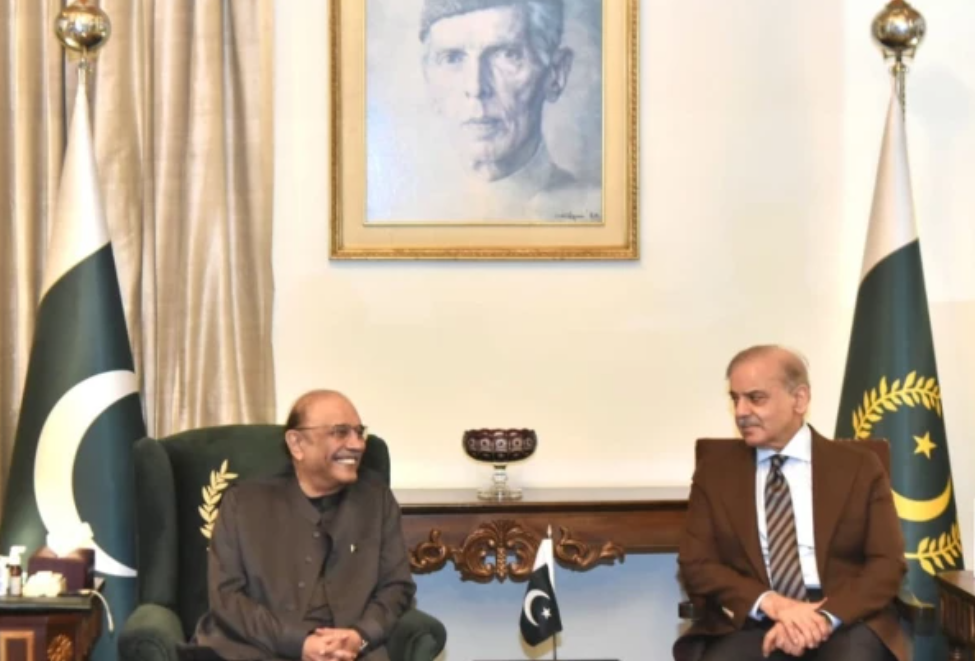
President Asif Ali Zardari has directed the government to take all possible steps to reduce the impact of inflation on the public, as higher fuel prices and regional tensions threaten to intensify economic pressure across Pakistan.
The directive was issued during a meeting with Prime Minister Shehbaz Sharif at Aiwan-e-Sadr, attended by senior officials including Deputy Prime Minister and Foreign Minister Ishaq Dar, National Assembly Speaker Ayaz Sadiq, Interior Minister Mohsin Naqvi, and Law Minister Azam Nazeer Tarar.
According to an official statement, the president called for measures to ease inflationary pressure, ensure the availability of essential commodities, and provide maximum relief to the public.
He said the government should make every effort to protect citizens from rising costs despite the difficult regional environment, tensions in the Middle East, and disruptions in global supply chains.
The meeting also reviewed the overall national situation, including developments related to Afghanistan and the shifting regional landscape.
Participants paid tribute to the martyrs of last year’s conflict with India and praised the professional capabilities of the armed forces, while reaffirming their commitment to national defence.
The president’s instructions came shortly after the government increased the prices of petrol and high-speed diesel by Rs. 15 per litre, marking the second fuel price hike this month.
The increase has sparked fresh concerns over inflation, with transporters raising fares, businesses warning of higher operating expenses, and consumers preparing for another round of price increases.
High-speed diesel is widely used in transport and agriculture, and the latest increase is expected to raise farming costs as the sowing season continues. Higher transport expenses are also likely to push fertilizer prices up further.
Petrol, which is mainly used in motorcycles and private vehicles, is also expected to add to household financial pressure, although the prime minister had earlier announced the continuation of a Rs. 100 per litre subsidy for motorists.
The latest fuel adjustment comes amid volatility in global oil markets driven by tensions in the Gulf region and supply disruptions around the Strait of Hormuz, one of the world’s most important oil shipping routes.