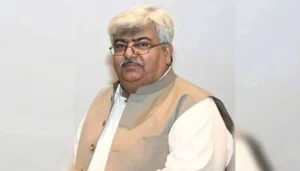





The government has taken substantial steps to meet the International Monetary Fund (IMF) program requirements, although some targets remain incomplete, Finance Secretary Imdadullah Bosal told lawmakers on Thursday.
Bosal briefed the National Assembly Standing Committee on Finance and Revenue, chaired by Syed Naveed Qamar, on the IMF program, tax reforms, privatisation, state-owned enterprise (SOE) losses and austerity measures.
He said Pakistan had completed three review rounds with the IMF. The program had helped strengthen foreign exchange reserves, support debt repayments and reduce pressure on external payments, according to the Finance Secretary.
Bosal said the government had made significant progress on tax reforms, including withdrawing tax exemptions and restricting supplementary grants.
However, he acknowledged that some IMF targets, particularly those linked to circular debt, had not been fully met. He said circular debt was nevertheless being kept within the prescribed limit.
The IMF team has arrived in Pakistan for the fourth review, with formal discussions with the Ministry of Finance expected to start on Monday.
On remittances, Bosal said the government was gradually ending the subsidy scheme from July 1. He said remittance inflows remained strong despite the withdrawal of the subsidy.
The committee was also updated on FBR reforms. Bosal said a Tax Policy Office had been created to analyse tax-related data and support policymaking.
He added that 74 changes had been proposed to the Companies Act and that the government was working to liberalise the sugar sector. Three provinces had agreed to sugar-sector deregulation, while one had opposed the policy.
Bosal said no additional tax incentives would be offered to Special Economic Zones.
The committee also examined the process for declaring assets by government officials. Naveed Qamar raised concerns about possible hurdles in obtaining the required information.
Bosal said the asset declaration process was already under way and that the FBR would share certain information with the Establishment Division.
Officials said disciplinary action could be taken where significant discrepancies were detected. Bosal rejected the suggestion that the process was being deliberately blocked, saying some information had been withheld because of security concerns.
Hina Rabbani Khar questioned the difference between asset disclosure requirements for parliamentarians and government officials, particularly where some officials’ information could be withheld on security grounds. Members asked officials to explain the basis for such restrictions.
The committee was separately informed that the government had not fully achieved its targets for education and health.
DISCO Privatisation
Lawmakers also reviewed plans to privatise power distribution companies, with IESCO, FESCO and GEPCO among the companies discussed.
Dr Nafisa Shah questioned the pace of the process. Power Division officials said they were confident about the first phase, while Privatisation Commission officials said the process would proceed without delay.
Officials said the privatisation exercise would be carried out transparently and noted strong investor interest in FESCO.
Javed Hanif asked whether the government intended to use the same approach for DISCOs that was followed during the privatisation process of PIA.
Khar and Naveed Qamar also questioned the conditions attached to the transactions and asked whether terms communicated during the expression-of-interest stage could later be changed.
Officials said the relevant minister or Secretary Privatisation could provide detailed clarification on the matter.
Traders’ Tax Scheme
PPP MNA Sharmila Faruqui raised concerns about the government’s traders’ tax scheme, saying its results had so far fallen short of expectations.
She claimed that only two new taxpayers had entered the scheme and questioned the expenditure on its advertising campaign.
Faruqui acknowledged the efforts of Minister of State for Finance Bilal Azhar Kayani but called for clearer information on the scheme’s actual performance.
She also asked the government to disclose the amount raised through the carbon levy and explain how the money was being spent.
Faruqui questioned the cost of the IMF’s Resilience and Sustainability Facility (RSF) for the public as well.
Govt Cuts Official Fuel Use
The committee was also briefed on the federal government’s austerity measures.
Bosal said the federal cabinet had approved a 50 percent reduction in fuel consumption for government vehicles.
The Finance Secretary estimated that the measure would generate savings of around Rs700 million.