




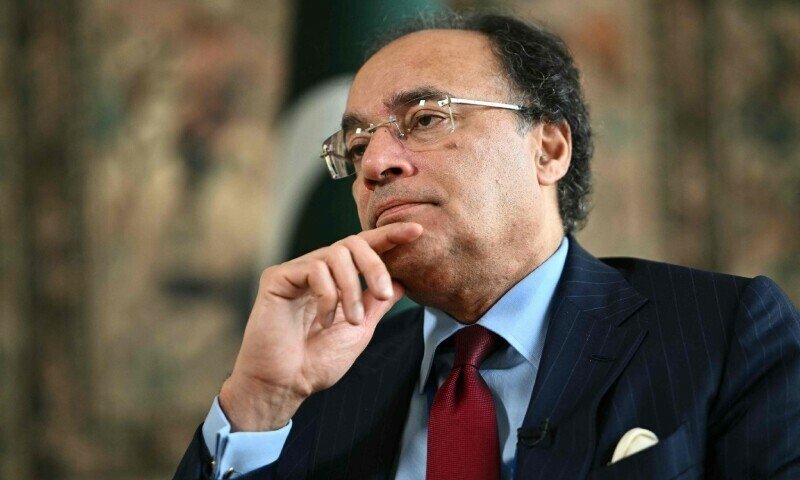
Finance Minister Muhammad Aurangzeb has called for Pakistan’s record $3 billion Eurobond proceeds and growing investor confidence to translate into real investment, sources told ProPakistani.
Aurangzeb made the remarks while chairing the second meeting of the committee working on a National Private Equity Policy Framework.
The meeting reviewed progress on measures aimed at developing Pakistan’s private equity market and attracting more domestic and international long-term capital.
The Finance Minister noted the strong and diversified participation in Pakistan’s recent $3 billion dual-tranche Eurobond issuance, saying the response from international investors reflected greater confidence in the country’s economic direction.
He said this momentum should be used to deepen Pakistan’s equity market and expand sources of long-term financing.
The committee reviewed work on regulatory, taxation and institutional investment issues identified after its first meeting.
On the regulatory side, members discussed measures being considered by the State Bank of Pakistan to facilitate institutional investment, capital repatriation and exits from private equity investments.
The committee also examined the accounting treatment of private equity investments under banking and IFRS requirements, with a focus on enabling participation by banks, development finance institutions, insurers and pension funds within existing safeguards.
Tax-related discussions focused on maintaining neutrality for private equity structures so that the fund structure itself does not create an additional tax burden.
Members also reviewed income distribution requirements and measures to prevent tax arbitrage, while ensuring that genuine investment is not discouraged.
The committee discussed the tax treatment of capital gains from private-company transactions and stressed the need for reliable valuation mechanisms to prevent undervaluation and other potential misuse.
Progress on the legal and regulatory framework for private equity and venture capital was also reviewed, including work being undertaken by the Securities and Exchange Commission of Pakistan.
Aurangzeb said private equity can provide businesses with patient, long-term capital while supporting expansion, entrepreneurship, employment and productivity.
He stressed that the proposed policy should go beyond creating financial structures and focus on mobilizing capital that ultimately reaches businesses and productive sectors.
The Finance Minister also called for a domestic ecosystem capable of attracting international and Pakistani investors, strengthening local fund-management expertise and connecting businesses with larger pools of institutional capital.
The committee agreed to continue work across the regulatory, taxation and legal streams and consolidate the recommendations into a unified policy framework.
Aurangzeb directed relevant institutions to maintain momentum and move the process from policy development toward implementation.
The proposed framework is ultimately aimed at creating a transparent and competitive private equity market that can attract long-term capital and expand financing options for Pakistan’s businesses.