If the federal government wants to keep petroleum taxes high, it should provide relief somewhere else. The most obvious place to start is the electricity bill.
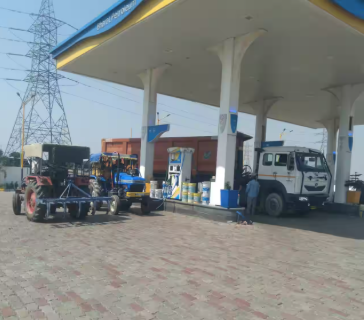
Fuel prices nearing Rs. 400 per litre are increasingly becoming the new normal. Some blame the war, others point to Platts. Whatever the external pressures, the government still has control over how much it spends and where it chooses to collect taxes.
That is where the International Monetary Fund (IMF) argument starts losing some of its force.
The Logic Does Not Add Up
Whenever petrol, diesel, electricity or another basic necessity becomes more expensive, the public is told there is little choice because of the IMF program.
But there is always a choice when it comes to government spending.
If austerity is genuinely being driven by the IMF, why should every discretionary government expense be treated as untouchable?
Why should a family struggling with a massive electricity bill be expected to sacrifice while official travel, allowances, protocol, vehicles, aircraft and other government expenses continue to consume public money?
Nobody is arguing that necessary official travel should stop.
The question is much simpler: should every government expense receive the same protection as food, electricity and fuel in a country where millions are already cutting household spending?
An electricity bill shows just how quickly costs can add up.
Consumers do not pay only the headline electricity tariff. Depending on consumption and the type of connection, bills can include fuel price adjustments, quarterly adjustments, financing charges, electricity duty, General Sales Tax (GST), income tax and fixed charges.
For households with high consumption or large fixed charges, the effective cost can become painfully high.
Where the Government Can Offer Relief
If petroleum levy revenue is considered necessary to support the fiscal position, then the government should consider reducing the burden somewhere else.
Electricity taxes could be cut. Unnecessary charges could be removed. Targeted relief could be given to households and businesses already paying heavily for energy. The tax burden on registered solar connections could also be reconsidered.
The key is that relief should not simply create another hole in the budget.
Government Should Look at Itself First
Foreign travel should face stricter scrutiny. Official aircraft and helicopters should be used only when genuinely justified. Allowances and protocol costs should be reviewed. Every discretionary expense should face the same scrutiny that is applied to ordinary taxpayers.
That leads to one simple question:
Would the government approve this expense as easily if the money had to come directly from a struggling taxpayer’s pocket?
Pakistan’s problem is not simply that the government needs more revenue.
It is also that people increasingly doubt whether their money is being spent carefully. That is the deeper credibility problem.
The public can, reluctantly, understand expensive oil. It can understand an IMF program. It can even understand difficult taxes.
What is much harder to accept is being asked to pay more while the government appears unwilling to reduce its own discretionary costs.
If the government wants Pakistanis to share the burden of the economic crisis, it should show that it is sharing that burden too.
Keep the petroleum levy if it is considered necessary. But then reduce the electricity burden and tighten government spending as well.
That would send a far more convincing economic message than blaming the IMF every time another household bill rises.
Austerity commands respect only when it cuts both ways. People are more likely to accept sacrifice when those in power are seen making sacrifices too.