




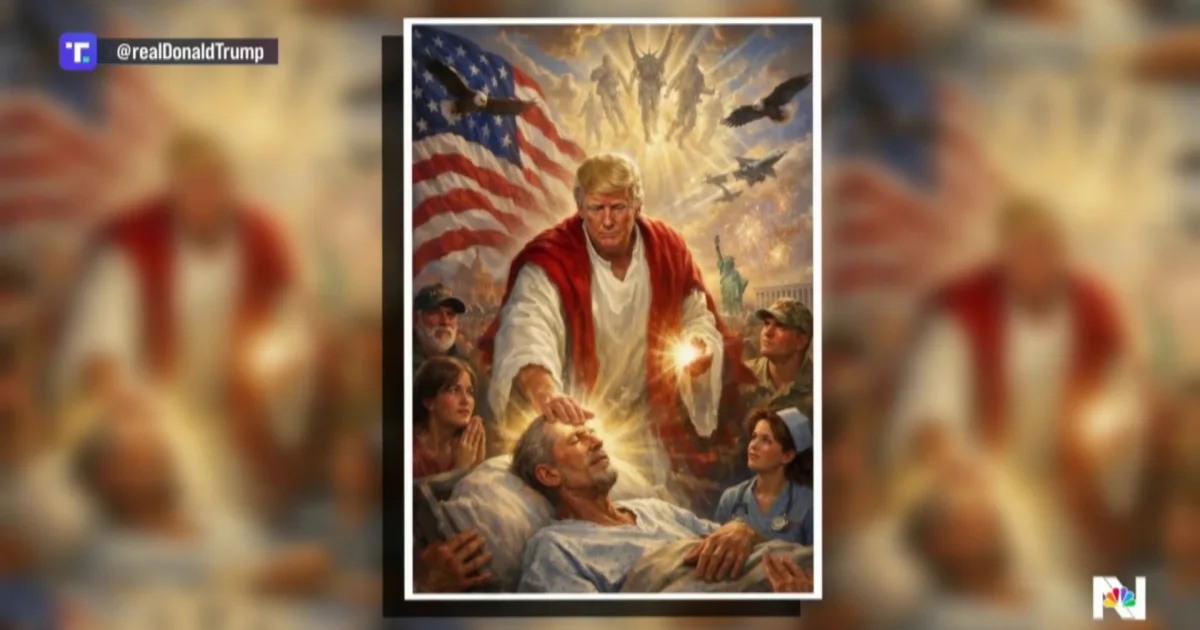
A wave of criticism erupted online after former US president Donald Trump removed an artificial intelligence-generated image that portrayed him in a scene resembling traditional depictions of Jesus Christ.
The image, widely circulated on social media, showed Trump in a religious-style setting that many viewers interpreted as presenting him in a messianic role. The post quickly drew strong reactions, with critics accusing him of trivializing religious symbolism and exploiting faith imagery for political attention.
As backlash intensified across political and religious communities, the image was taken down from his account. The controversy rapidly spread beyond social media, becoming a major talking point in international media coverage and political commentary.
Supporters of Trump defended the post, arguing it was intended as satire or internet humor rather than a serious religious statement. However, opponents said the imagery crossed ethical and cultural boundaries, especially given the sensitivity surrounding religious figures.
Political observers say the episode highlights how AI-generated content is increasingly influencing political communication, allowing viral images to shape public debate within hours. Analysts also noted that controversial online posts — even when short-lived — can dominate headlines and amplify political polarization in the digital era.
The incident adds to ongoing debates about the responsible use of artificial intelligence, online messaging by public figures, and the growing power of viral visuals in modern politics.