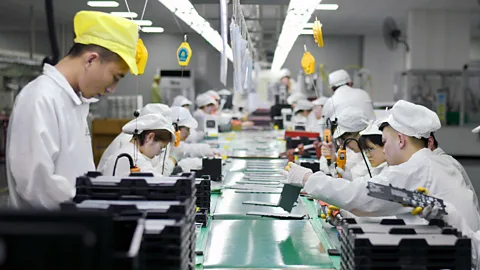
China’s Dongjin Group is set to establish a dry battery manufacturing facility in Allama Iqbal Industrial City, Faisalabad, marking another step in Pakistan’s expanding industrial cooperation with Chinese investors.
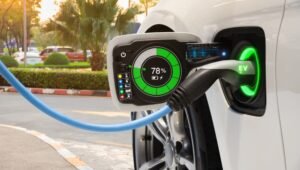
According to the Associated Press of Pakistan, the project is aimed at addressing the country’s rising demand for batteries, fueled by rapid growth in electric vehicles and solar energy systems.
The company will invest $15 million in the project, which will be located inside the Special Economic Zone near Faisalabad. The investment agreement has already been formalized with the Punjab Board of Investment and Trade (PBIT).
Speaking to Wealth Pakistan, Sharqi Ali Tipu, Director of Marketing at PBIT, said the decision came after the company observed strong market potential in Pakistan’s battery sector, particularly due to increasing adoption of EVs and renewable energy solutions.
He noted that the project is expected to generate broad economic activity, create jobs, and encourage the transfer of modern manufacturing technology to local industries.
The facility is also expected to benefit related sectors such as automotive parts, electronics, chemicals, packaging, and engineering services, while supporting employment opportunities in Faisalabad and surrounding areas.
Tipu highlighted that Allama Iqbal Industrial City is a flagship Special Economic Zone under the China-Pakistan Economic Corridor (CPEC), offering modern infrastructure, strategic connectivity, and investor-friendly policies designed to attract advanced manufacturing projects.
Under Pakistan’s SEZ incentive framework, the company will receive a 10-year income tax exemption along with a one-time exemption on customs duties and taxes for importing plant and machinery.
Officials at PBIT reiterated their commitment to facilitating the project through all stages of development.
Industry experts believe that expanding local battery manufacturing capacity is critical for meeting Pakistan’s growing demand for energy storage solutions, particularly in EVs and renewable energy systems.
Former Engineering Development Board chairman Almas Hyder said Pakistan is gradually moving toward local production of lithium-ion batteries to reduce import dependence and improve energy security.
He also pointed to the recently introduced Battery Manufacturing Policy 2026–31, which is expected to attract further private investment and support domestic production.
Hyder added that batteries are becoming increasingly strategic worldwide due to their role in renewable energy integration, electric mobility, and grid stability.
“The more batteries produced locally, the greater Pakistan’s potential to reduce reliance on costly electricity and imported fuels,” he said.