




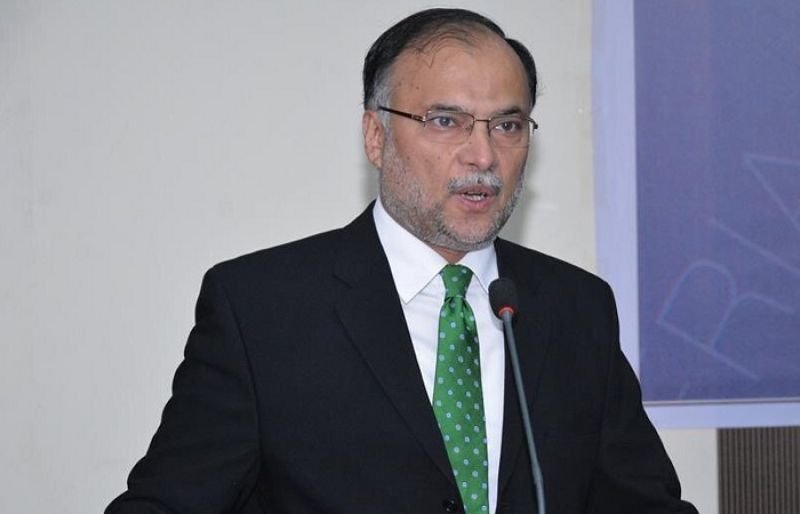
Federal Minister for Planning Ahsan Iqbal has urged introducing performance-based incentives for provinces under the NFC Award to encourage effective population management, warning that unchecked population growth is placing Pakistan’s development and economic stability under serious strain.
Speaking at the launch of the National and Provincial Population Projections 2023–2050 in Islamabad, he said rapid population growth is increasingly burdening key sectors including health, education, employment, water, and food security, making sustainable development more difficult.
He warned that if current trends continue, Pakistan’s population could reach between 370 million and 400 million by 2050, significantly intensifying pressure on public services and national resources.
Ahsan Iqbal noted that 82% of NFC resource distribution is based on population share, arguing that the system needs reform to encourage provinces to actively manage population growth. He proposed that provinces achieving measurable improvements in population stabilization should receive additional incentives and recognition.
He said Pakistan is now using digital census data to guide long-term planning for the first time, calling the newly released projections a key milestone for policymaking, resource allocation, and development planning. He emphasized that population is not just a statistical figure but a central development issue linked to economic growth, human capital, education, healthcare, and national security.
The minister cautioned that Pakistan’s population growth rate remains high compared to global standards, and earlier assumptions of slowing growth were challenged by the 2023 census results.
He stressed the need to shift focus from population size to quality of human capital, stating that Pakistan must invest in education, skills, health, and productivity to turn its growing youth population into a demographic advantage.
He revealed that nearly 40% of children in Pakistan face malnutrition and stunted growth, calling the situation alarming and linked to limited household and systemic resources.
According to projections, Pakistan’s under-18 population could rise to 140 million by 2050, while the working-age population may increase to 255 million. He said this demographic shift could become an opportunity if properly supported through education, skills development, and job creation.
Ahsan Iqbal added that the projections will guide major national frameworks including Uraan Pakistan, Vision 2035, the Sustainable Development Goals, future five-year plans, and NFC deliberations. He said the government is increasingly relying on data-driven planning and emerging technologies, including artificial intelligence, for long-term policymaking.
He noted that after the 18th Constitutional Amendment, population management is primarily a provincial responsibility, urging provinces to take stronger action. He reiterated his proposal to link NFC incentives with population control performance.
Calling unchecked population growth a “serious national challenge,” he urged media, researchers, and civil society to help raise awareness. He warned that without urgent action, Pakistan risks a widening gap between population growth and economic capacity, leading to long-term pressure on jobs and public services.
The event was attended by Health Minister Mustafa Kamal, UNFPA representatives, Planning Commission officials, population experts, researchers, and civil society members.