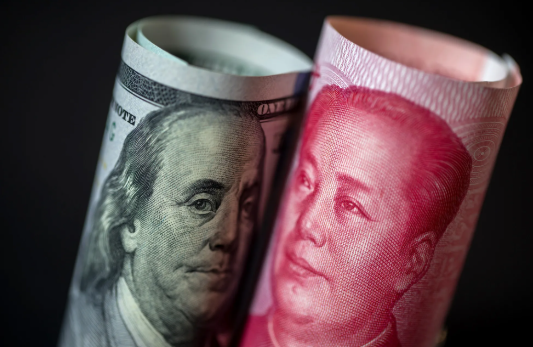
Pakistan is seeking greater financing from the United States and plans to return to international capital markets as the government works to reduce its reliance on additional borrowing from China.
Finance Minister Muhammad Aurangzeb told the Financial Times that Pakistan has proposed a $10 billion swap line with the US, which the government sees as a confidence-building measure for international investors.
Aurangzeb said Pakistan had received positive engagement from Washington and expects a response on the proposal within the next few months.
He said the government also wants greater involvement from the US Export-Import Bank and the US International Development Finance Corporation (DFC) to support investment and trade.
The finance minister said Pakistan wants to move away from an aid-dependent model toward an economy driven by trade and investment.
Pakistan has made progress on several economic indicators under its $7 billion, three-year IMF program approved in 2024. The fiscal deficit has narrowed, inflation has fallen and foreign exchange reserves have recovered.
However, economic growth remains weak. The government expects GDP growth of 3.7 percent in fiscal year 2025-26, while the trade deficit widened to $39.5 billion in the year ended June.
Aurangzeb said the government is therefore focusing on export-led growth instead of consumption-driven expansion, which can increase imports and put pressure on Pakistan’s external account.
Pakistan is also preparing to raise funds from international capital markets. The government has appointed banking consortiums to arrange Eurobonds, Islamic sukuk and rupee-denominated, dollar-settled bonds.
Aurangzeb said Pakistan could issue between $1 billion and $2 billion in Eurobonds during the current fiscal year, depending on market conditions, pricing and maturity.
The country also plans to raise $750 million through yuan-denominated Panda bonds.
Standard Chartered and Citi are members of all three banking consortiums appointed for the planned borrowing.
Aurangzeb said US institutions could also finance specific projects and investments in Pakistan. Potential areas include financing Boeing aircraft for the recently privatized Pakistan International Airlines and supporting the modernization of local oil refineries.
He also said the DFC could potentially take equity stakes in Pakistani conglomerates.
China remains Pakistan’s largest foreign creditor. World Bank data cited in the report shows that Chinese creditors accounted for around 23 percent of Pakistan’s $129.7 billion in total outstanding foreign debt in 2024.
Aurangzeb said stronger engagement with Washington should not be viewed as a choice between the US and China. However, he confirmed that Pakistan is not currently seeking additional financing from China.
Pakistan is also working to improve its sovereign credit rating before returning to international markets. S&P currently rates Pakistan at B, while Fitch has assigned a B-minus rating, with both agencies maintaining stable outlooks.
Aurangzeb said the government is targeting a B-plus rating within the next 12 months and ultimately wants Pakistan to reach the double-B category.