




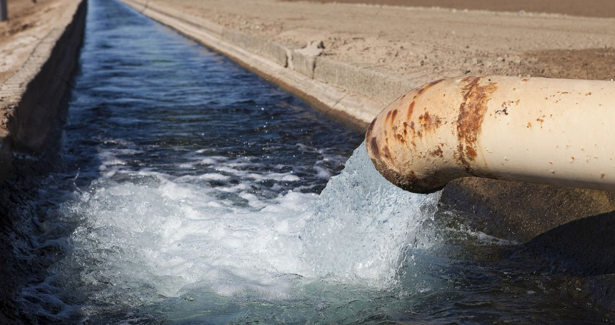
Pakistan will need an estimated $18 billion in federal financing over the next decade to strengthen its water infrastructure, improve irrigation efficiency and increase water supplies to farms, as the country faces worsening water scarcity, according to a Planning Commission report.
Under the National Water Security framework of URAAN Pakistan, the government aims to raise water use efficiency from 40 percent to 70 percent and increase water availability at farm gates from 58.3 million acre feet (MAF) to 79 MAF by 2029.
Storage Capacity Set to Expand
The framework targets an increase in national water storage capacity from 15.318 MAF to 23.54 MAF by 2029. The report warns that existing live storage accounts for only 11 percent of annual Indus River flows, leaving the country vulnerable to both water shortages and floods.
Projects currently under the Public Sector Development Programme are expected to add 9.821 MAF of storage capacity. A pipeline of proposed projects, including the Akhori Off Channel Storage Dam, Shyok Dam and Skardu Dam, could provide another 14.5 MAF.
The estimated $18 billion financing requirement covers strategic water infrastructure, including reservoir development, flood management and canal modernization. The framework also proposes establishing a Water System Integrator function under the Indus River System Authority (IRSA) to improve accountability in water distribution from rivers to farms.
Push for More Efficient Irrigation
Agriculture accounts for approximately 95 percent of Pakistan’s freshwater withdrawals, while irrigation efficiency remains around 40 percent. The report calls for wider adoption of drip and sprinkler irrigation through financial incentives, changes to abiana charges to reflect actual operation and maintenance costs, and adjustments to cropping patterns to improve water productivity.
It identifies approximately 20.58 million acres of suitable agricultural land outside formal irrigation networks, offering potential for expanding irrigated agriculture. The report also recommends linking subsidies for solar-powered agricultural tubewells to groundwater registration and sustainable extraction limits.
Groundwater Depletion Raises Alarm
The Planning Commission warns that solarization is accelerating groundwater depletion by allowing farmers to pump water at virtually no additional energy cost. Groundwater levels are falling by 0.5 to 1 meter annually across Punjab, while the Indus Basin Aquifer has been identified as the world’s second most overstressed aquifer system.
The framework calls for stronger groundwater regulation alongside irrigation reforms to prevent further depletion and ensure the sustainable use of water resources.
Flood Warning Time Shrinks
The report highlights a sharp decline in flood warning time at Marala Headworks, from 40 hours in 2014 to just 5.5 hours in 2025, underscoring the need to strengthen the country’s flood monitoring and protection systems.
Proposed measures include implementing the National Flood Protection Plan IV, strengthening glacier monitoring through a National Glacier Protection Act and updating flood design assessments using revised hydrological data. The framework also proposes declaring water security a national security priority.
Wastewater Recycling on the Agenda
Pakistan aims to recycle at least 25 percent of urban wastewater under the framework. The report notes that approximately 53 percent of monitored urban water sources are unsafe for human consumption, highlighting the need for better water quality management and treatment infrastructure.
The Planning Commission warns that meeting the 2029 targets will depend on coordinated implementation of infrastructure projects, regulatory reforms and improvements in water governance across the country.