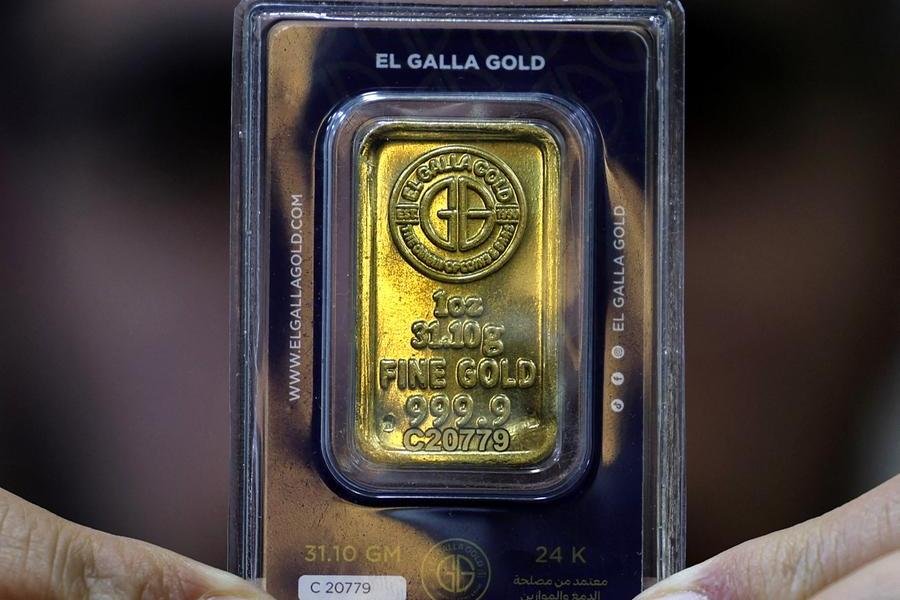
Gold prices could resume their climb toward the $5,000-per-ounce mark as investors assess upcoming US inflation data and signals from the Federal Reserve on interest rates.
Spot gold fell 0.3% to $4,642.74 per ounce by 0410 GMT on Wednesday, retreating slightly after reaching its highest level since mid-May in the previous session.
US gold futures were up 0.1% at $4,700.70.
The latest pullback comes after a strong rally last week and further gains on Tuesday, with the market responding to developments surrounding US Treasury debt, including the announcement of a bond buyback programme.
The immediate focus is now on the July Personal Consumption Expenditures (PCE) price index, due later Wednesday. As the Federal Reserve’s preferred inflation gauge, the reading could have a significant impact on expectations for the path of US interest rates.
A weaker-than-expected inflation figure could boost expectations for lower rates. That would generally support gold by reducing real yields and making an asset that does not pay interest more competitive.
Investors are also preparing for Federal Reserve Chairman Kevin Warsh’s address at the Jackson Hole symposium on Friday. Any indication that policymakers are becoming more comfortable with easing monetary conditions could provide another lift to bullion.
Wael Makarem, financial markets strategist lead at Exness, indicated that gold would have the strongest support if inflation comes in softer while Warsh delivers a dovish or measured message. Such a combination could reinforce expectations for lower real yields.
Concerns over US fiscal conditions could provide an additional source of demand. Makarem also highlighted the potential impact of Treasury buyback plans on investor confidence.
With gold already trading above $4,600 an ounce, the metal remains within striking distance of the $5,000 threshold. If US inflation cools and the Federal Reserve signals a more accommodative stance, gold could regain upward momentum and move closer to the key $5,000 level.