Pakistanis are now paying nearly 50 percent higher petroleum levy on petrol compared to last year, even though international oil prices have shown little upward movement, intensifying criticism that recent fuel price hikes are largely tax-driven.
Official pricing documents show the petroleum levy on petrol has been increased to Rs.117.41 per liter, up from around Rs.78 per liter in May 2025. The latest revision alone added Rs.13.91 per liter to the levy, making taxation the main driver behind the newest fuel price increase.
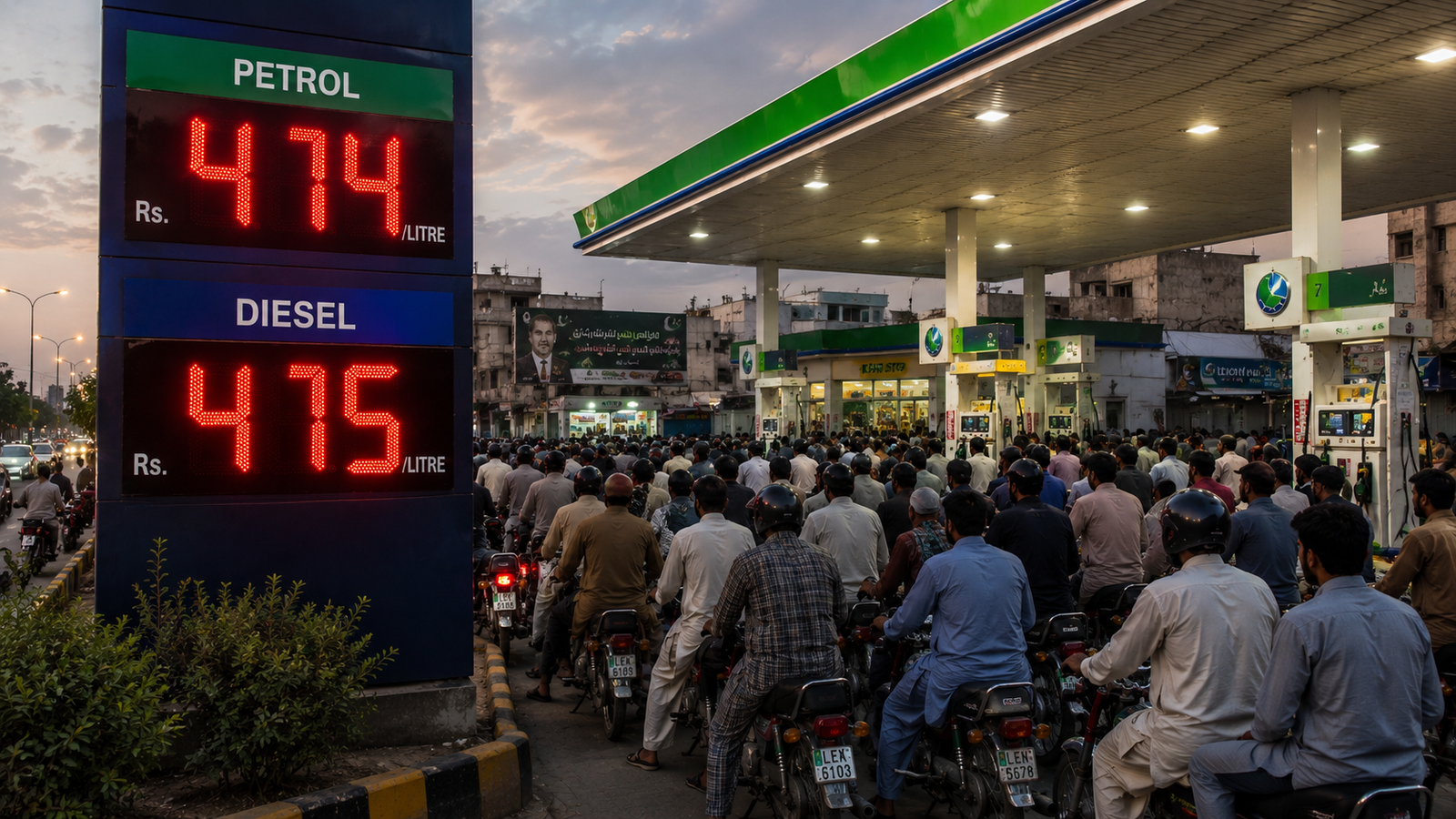
Following the levy adjustment, the government raised retail fuel prices effective May 9, 2026. Petrol prices increased by Rs.14.92 per liter to Rs.414.78, while high-speed diesel went up by Rs.15 per liter to Rs.414.58.
Pricing analysis indicates that global petrol prices remained largely stable during the review period. Based on international benchmarks, petrol’s ex-tax price stayed close to previous levels, suggesting the majority of the increase resulted from higher domestic taxes rather than changes in crude oil markets.
Diesel prices showed only a modest global increase equivalent to roughly Rs.7–8 per liter, yet consumers faced nearly double that adjustment at local pumps.
Economists say the widening gap between international fuel costs and domestic retail prices reflects the government’s growing reliance on petroleum levies as a revenue source. The levy has increasingly become one of the fastest ways for authorities to generate non-documented tax income without expanding the formal tax base.
The move comes as the Federal Board of Revenue (FBR) struggles with a reported revenue shortfall exceeding Rs.600 billion during the current fiscal year. Analysts believe higher petroleum levy collections are helping offset the gap and support ongoing fiscal commitments linked to economic stabilization programs.
As a result, Pakistan’s fuel prices remain among the highest in the region relative to average incomes, despite global markets experiencing comparatively stable or softer oil prices.
Public reaction has been strong, with social media users questioning why domestic fuel prices continue rising even when international trends do not justify major increases.
Economists warn that sustained high fuel prices will continue pushing transportation costs, food inflation, and overall household expenses higher, adding pressure on consumers already coping with elevated electricity tariffs and broader cost-of-living challenges.
The government has not officially connected the latest levy increase to revenue shortfalls, stating that fuel pricing adjustments are made under established fiscal and petroleum pricing mechanisms.