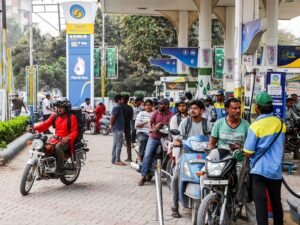
The federal government has barred private oil marketing companies (OMCs) from importing high-speed diesel (HSD) during fiscal year 2026-27, making Pakistan State Oil (PSO) the country’s sole diesel importer.
The decision, approved by the federal cabinet, is part of a broader overhaul of Pakistan’s fuel import policy aimed at ensuring stable supplies and reducing the impact of rising international oil prices on consumers.
Under the new policy, private OMCs will still be allowed to import petrol, but only with approval from the Oil and Gas Regulatory Authority (OGRA) based on their historical market share. Each import cargo must be at least 10,000 tonnes.
OMCs that fail to meet their approved import commitments, delay shipments, or do not lift committed quantities from local refineries will lose their petrol import allocations for the following nine months.
The cabinet has also directed PSO to pursue a long-term petrol supply agreement with OQ Trading of Oman to strengthen fuel security, particularly in light of risks to shipping through the Strait of Hormuz.
For fuel pricing, OGRA will calculate import costs using a rolling seven-working-day average of Platts Arab Gulf benchmarks for petrol (92 RON) and 10 ppm sulphur diesel. The regulator will also publish ex-depot petrol and diesel prices daily on its website without requiring approval from the prime minister or the federal government.
PSO’s actual import premiums, incidentals and customs duties will continue to serve as the benchmark for calculating local fuel prices. If PSO does not import petrol during the seven-day pricing window, calendar year-to-date averages or the premium under any long-term supply contract, such as with OQ Trading, will be used instead.
A similar mechanism will apply to diesel, with pricing based on PSO’s long-term supply arrangement with Kuwait Petroleum Company when no recent imports are available.
The revised policy leaves other pricing components unchanged, including exchange rate adjustments, refinery regulatory duty, inland freight equalisation margin (IFEM), Research Octane Number (RON) adjustments and sulphur-related penalties.
The government has also maintained that the petroleum levy will remain within the maximum limit approved by the federal cabinet, with applicable rates to be notified by the Ministry of Finance.