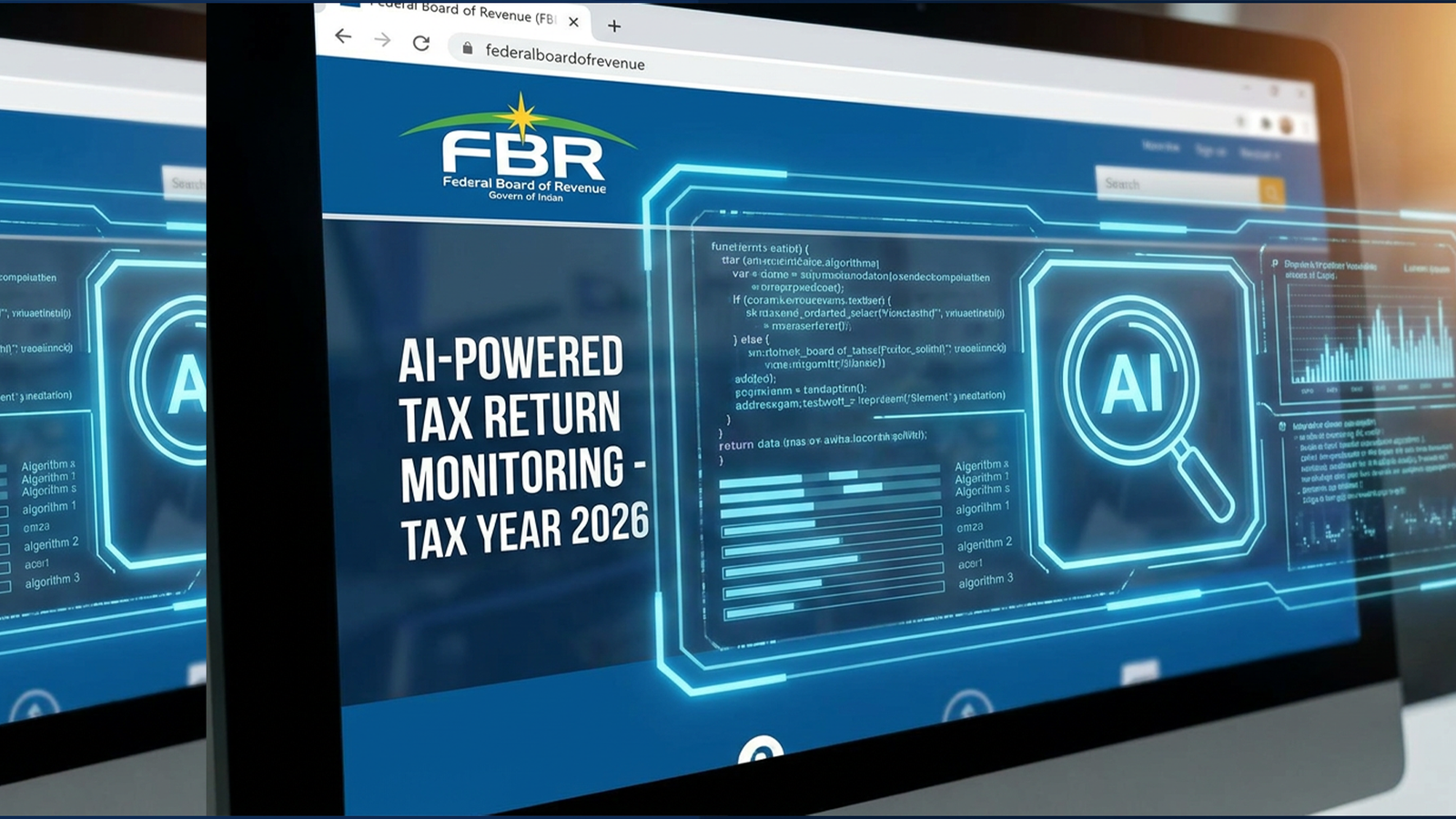
The Federal Board of Revenue (FBR) has widened its use of artificial intelligence to examine tax returns and identify possible inconsistencies in taxpayers’ declarations.
The new system will compare information reported in tax returns with data available from several sources, including property deals, bank transactions, vehicle records and travel information.
FBR said AI models will also study taxpayers with similar profiles and highlight declarations that show unusual differences or patterns.
The technology was initially tested on a limited number of income tax and sales tax returns. FBR has now extended the system to Income Tax Returns for Tax Year 2026 as well as upcoming sales tax returns.
A risk alert generated by the system will not automatically mean that a taxpayer has evaded tax or committed fraud.
Cases identified through the system may instead be subjected to additional scrutiny, audit or assessment proceedings, depending on the circumstances and applicable law.
The move is part of FBR’s wider effort to make tax administration more reliant on data and automated processes.
It will also work alongside the National Faceless Center in Islamabad, which is designed to use computerized risk-based methods for selecting and assigning audit cases.
The system is expected to reduce discretionary decision-making in audits and bring more consistency to the selection process.
FBR is ultimately seeking to build a more automated tax administration system that can improve compliance while making tax services more efficient.