



The Pakistan Agricultural Coalition (PAC) has proposed a new wheat financing model that would allow farmers to keep their harvested wheat while borrowing money against it for up to six months.
PAC CEO Kazim Saeed said the government could provide the financing facility while retaining the first right to purchase the wheat after six months, regardless of the prevailing market price.
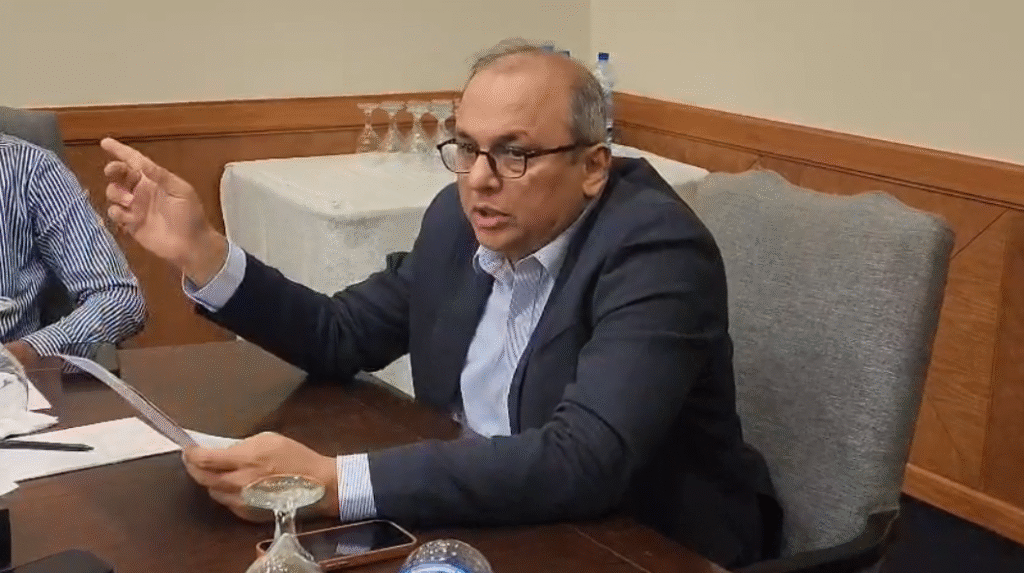
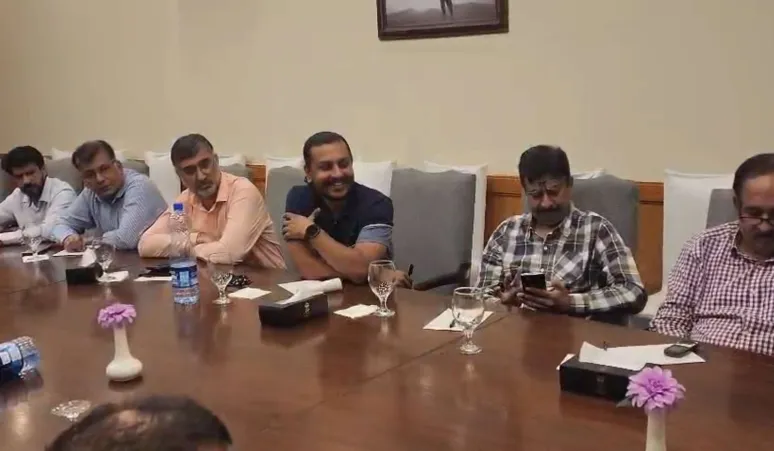
Speaking at a media briefing ahead of the Agri Connections Conference and Expo, Saeed said the proposal would build on the private aggregator model but provide financing support more directly to farmers.
He said the model could help address issues that emerged under Punjab’s wheat aggregator system last year. According to Saeed, the indicative price initially appeared attractive to farmers, but weather-related losses later changed market expectations.
He also referred to cases in which farmers were reportedly told they could not retain wheat without permits, saying such situations could have been avoided under a different procurement and financing structure.
Wheat Sector Moves Toward Deregulation
Saeed said Pakistan’s government-controlled wheat sector is moving toward deregulation and will require greater participation from private businesses.
The International Finance Corporation (IFC) is expected to discuss the transition to a deregulated wheat sector at the Agri Connections Conference and Expo, scheduled for October 1 and 2 at the Lahore Expo Center.
The event will focus on food security, agricultural investment, climate risks, food affordability and food safety under the theme “Food Security and Agri Investment in the Era of Climate Change.”
Saeed said food security has increasingly become a household-level concern, while Pakistan’s agricultural exports remain below their potential partly because of food safety problems and rejection of consignments associated with excessive pesticide use.
The conference will also cover livestock investment, shrimp farming, olive oil, chilled meat exports and emerging agricultural businesses.
More Financing for Farmers
The conference program includes discussions on food security and changing trade dynamics, agricultural input markets, deregulation of supply chains, climate change, crop insurance and carbon finance.
Saeed said the government is working toward a broader agricultural financing system covering quality inputs, warehouse receipt financing, collateral-based lending, agricultural business finance and crop insurance.
PAC has contributed to the development and adoption of the warehouse receipt financing framework. The State Bank of Pakistan is leading the Zarkhez framework, while the Securities and Exchange Commission of Pakistan is working on crop insurance. PAC has also been assigned a leading role in the government’s crop insurance work.
The second day will focus on agricultural investment, including livestock, farmer financing and shrimp exports. An investor roundtable jointly involving SECP and PAC will feature representatives from the SECP, Pakistan Stock Exchange, PMEX and Pakistan Business Council.
The conference will also examine agricultural technology and mechanization, with presentations from organizations including Hello Tractor, the Punjab Agriculture Department, Al Ghazi Tractors, Fauji Fertilizer Company and Topcon Positioning Systems.
Agri Startups to Pitch Investors
The event will also feature ZarZaraat, a competition for agricultural startups that uses an investor-pitch format similar to Shark Tank.
Saeed said 51 companies participated last year, producing three finalists. This year, PAC received 25 applications and selected three finalists along with one honorable mention.
Other discussions will cover agricultural technology, mechanization, fertilizer use and precision agriculture.
Saeed also highlighted Punjab’s agricultural credit and mechanization initiatives, including the Kissan Card, tractor schemes and financing for high-tech machinery.
He said Sindh was working on a legal framework for modern cooperatives aimed at strengthening farmers’ position in the market.
According to Saeed, expanding these initiatives will require greater involvement from banks, businesses, investors and other private-sector participants to increase the flow of capital into agriculture.