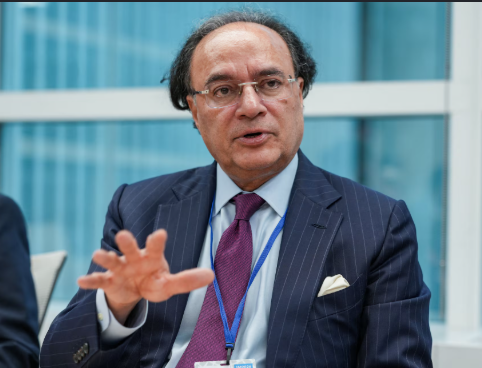
Finance Minister Muhammad Aurangzeb has said Pakistan was unable to utilize some of the international support pledged after the 2022 floods, despite commitments of nearly $11 billion.
Speaking at the Climate Implementation Bridge (BRIDGE) event in New York during the United Nations General Assembly’s High-Level Week, Aurangzeb said the country’s ability to convert climate commitments into projects remains a key challenge.
Aurangzeb said effective climate implementation depends on three factors: a strong policy framework, access to financing, and the capacity to deliver projects at the country level.
He said Pakistan has made progress in strengthening its climate policy framework and is working to mobilize financing through domestic resources, international financial institutions, capital markets, and climate funds.
However, he pointed to institutional fragmentation and a shortage of investable and bankable projects as continuing obstacles.
Referring to the 2022 floods, the finance minister said some international support remained unutilized despite generous pledges. He linked the issue to the need for better-prepared projects and stronger implementation capacity at the country level.
Aurangzeb welcomed Pakistan’s participation in BRIDGE and called for practical “no-regret” decisions that can move the initiative from dialogue to action.
He said climate commitments must ultimately be translated into concrete projects and measurable outcomes that deliver tangible benefits for communities.
The finance minister’s engagements during the UNGA High-Level Week have focused on climate resilience, mobilizing resources for climate action, and strengthening international partnerships to support implementation on the ground.