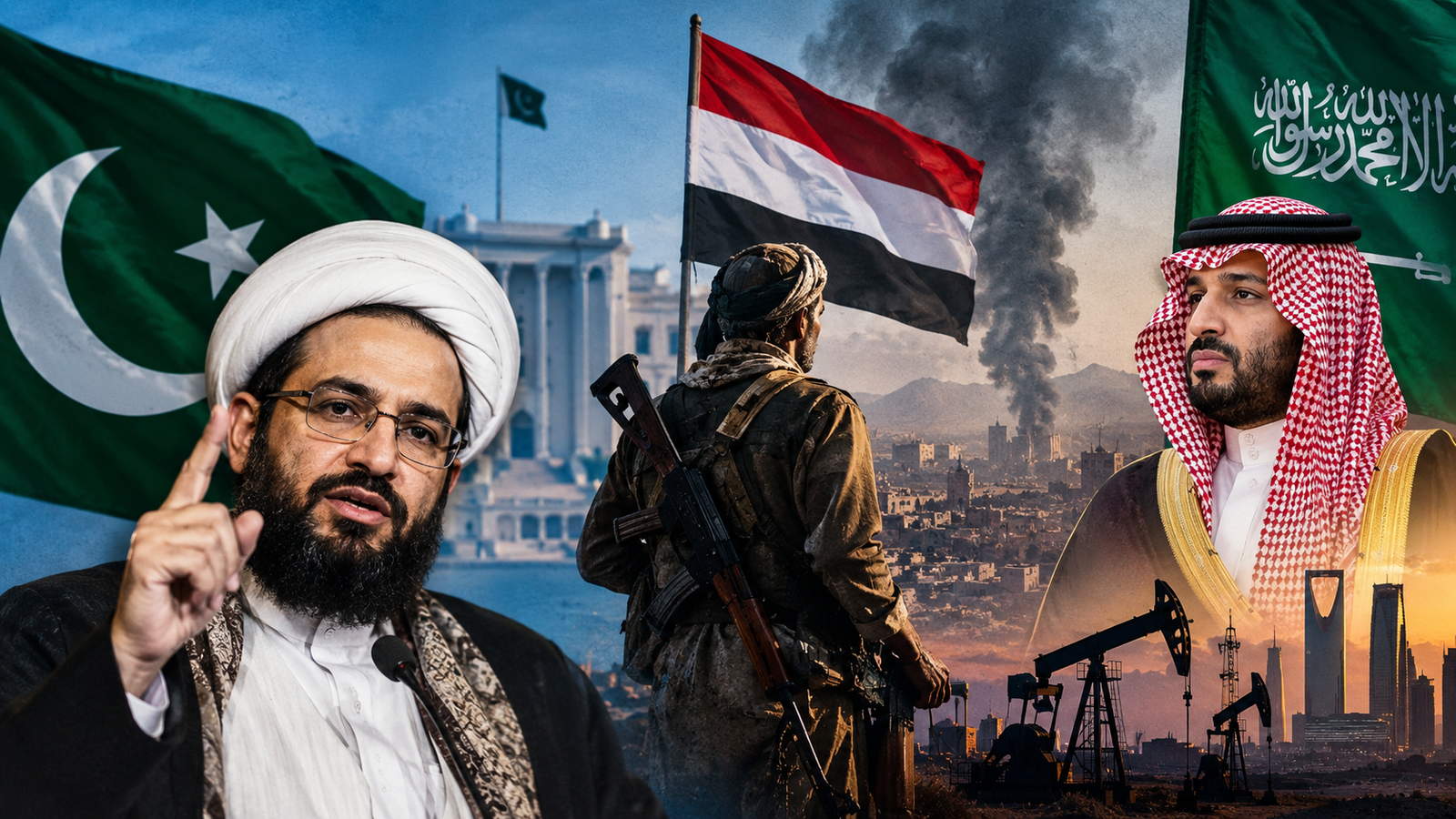
Tahir Mehmood Ashrafi’s decision to declare Yemen’s Houthis “terrorists” raises a much bigger question than whether the label sounds appropriate. It asks who exactly gets to speak for Islam in Pakistan, and whether a Pakistani cleric can turn a complicated regional conflict into a religious verdict for an entire country.
Ashrafi, the Prime Minister’s Coordinator for Religious Harmony and the Pakistani Diaspora in Muslim Countries, said the Houthis have no connection with Islam and stressed that Pakistan stands firmly with Saudi Arabia.
But there is an important difference between expressing a religious or political opinion and speaking on behalf of Pakistan’s population.
Pakistan is already taking a clear state position on the conflict. Islamabad has condemned Houthi attacks on Saudi civilian and economic infrastructure and separately condemned what Saudi Arabia described as a Houthi drone attack targeting Makkah. Pakistan, Saudi Arabia and Türkiye also signed the Makkah Joint Defence Agreement, under which an armed attack against one member is to be treated as an attack against all three.
So Ashrafi is broadly echoing Islamabad’s diplomatic position. The problem begins when that foreign-policy position is dressed up as though one cleric can define the religious position of Pakistan’s Muslims.
Pakistan’s Constitution provides for the Council of Islamic Ideology as an advisory constitutional body, with provision for representation of different schools of thought. Even that body advises constitutional authorities rather than speaking as an unlimited religious authority over every Muslim in the country.
There is also a legal distinction that gets lost in this debate. Under the Anti-Terrorism Act, the power to formally proscribe an organization rests with the federal government through an order published in the official Gazette. A cleric can call a group terrorist, but that does not itself create a Pakistani legal designation.
And the Houthi side of the story should not simply disappear from the discussion. Abdul-Malik al-Houthi has rejected Saudi claims that his forces targeted Makkah, calling the allegation an “ugly lie,” while saying the group’s targets are Saudi military positions and oil infrastructure. That is his claim, not an independently established fact, but it demonstrates why reducing the Yemen conflict to “Islam versus terrorists” leaves out the political and military context.
Ashrafi’s longstanding support for the Saudi position is also documented. In 2018, Arab News reported that he backed the Saudi-led campaign against the Houthis and described his organization as having issued a fatwa against them. That history makes his latest statement understandable as part of a longstanding position, although it does not by itself establish any financial motive.
The bigger issue is simple: Pakistan can have a Saudi policy without pretending that every Pakistani Muslim has the same religious voice.