



Pakistan has launched an international campaign to attract foreign investors for the privatization of three major power distribution companies, even as unresolved dues owed to Chinese power producers remain a key concern for prospective buyers.
A government delegation led by Prime Minister’s Adviser on Privatization Muhammad Ali has started outreach visits to Turkiye and is also scheduled to travel to China and Saudi Arabia to market the privatization of Islamabad Electric Supply Company, Faisalabad Electric Supply Company and Gujranwala Electric Power Company.
The initiative is part of the government’s broader push to reform the power sector by reducing losses, improving operational efficiency and bringing in private investment.
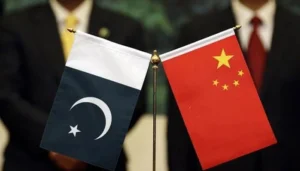
However, officials acknowledged that outstanding payments to Chinese Independent Power Producers operating under the China-Pakistan Economic Corridor could complicate the privatization process.
According to official estimates, the Central Power Purchasing Agency currently owes around Rs. 560 billion to Chinese IPPs, mainly because of persistent circular debt and weak recoveries by distribution companies.
Muhammad Ali said the government intended to address investor concerns by allowing the adjustment of outstanding dues against future payments payable to government entities and by structuring transactions in a way that protects investor interests.
The government is also trying to settle wider power sector liabilities through a Rs. 1.225 trillion financing facility arranged with 18 commercial banks.
Officials said progress on that front had remained slow as Chinese IPPs had so far not agreed to offer payment discounts similar to those accepted by other power producers, arguing that such decisions required approval from authorities in Beijing.
They said the issue of pending payments and power purchase contract renegotiations also came up during recent visits to China by Finance Minister Muhammad Aurangzeb and Power Minister Awais Leghari, but no major breakthrough was achieved.
The privatization of the three distribution companies is being presented as a key step in the government’s effort to overhaul the power sector, though unresolved liabilities and investor concerns over payment risks may weigh on the process.