



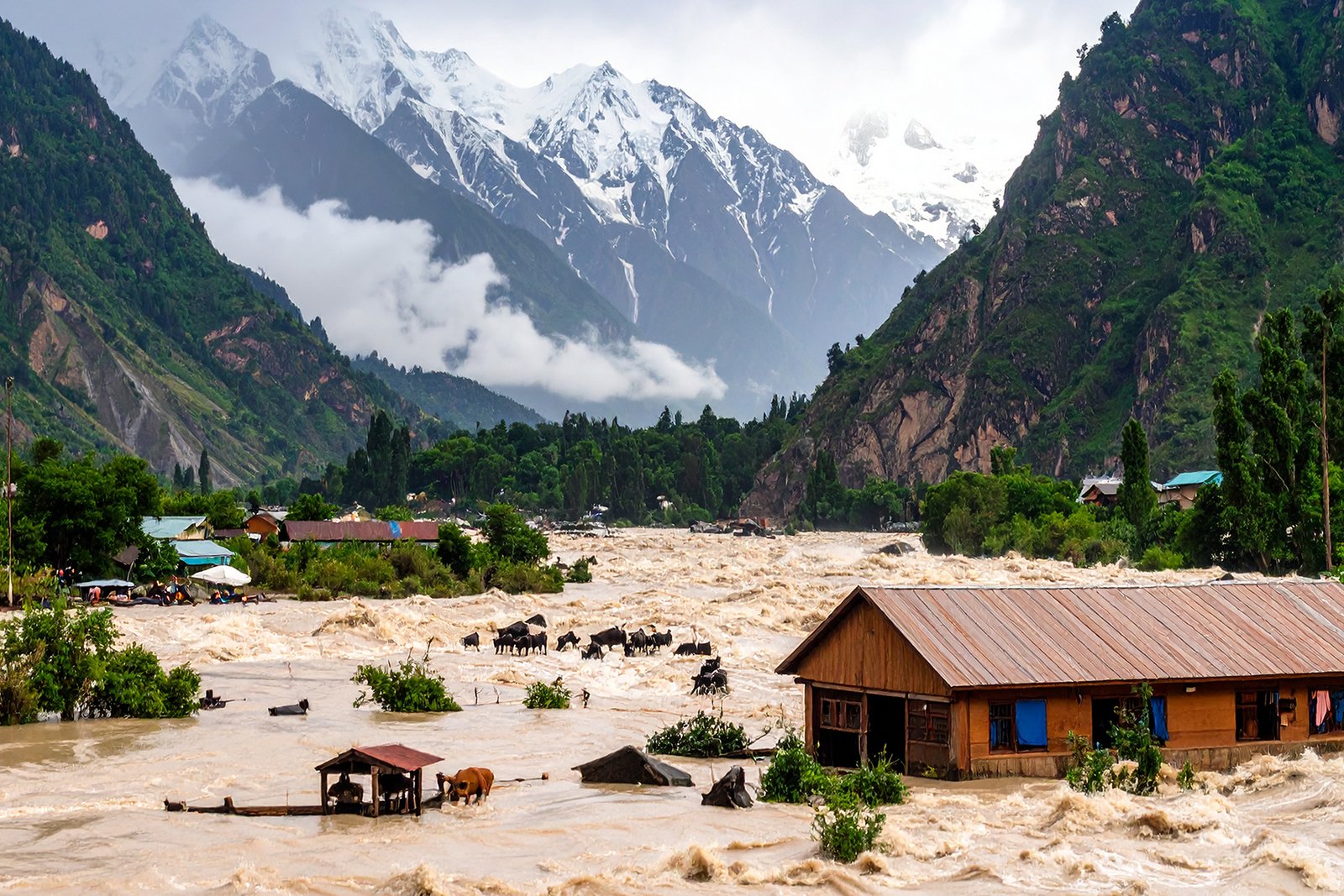
The Space and Upper Atmosphere Research Commission (Suparco) has identified 130 potentially dangerous glacial lakes across northern Pakistan that could pose a risk of glacial lake outburst floods (GLOFs) to downstream communities.
The assessment is based on satellite imagery captured on May 31 and June 1, 2026, and is part of ongoing monitoring efforts carried out in coordination with disaster management authorities.
According to Suparco, only 24 of the 130 identified lakes are currently unfrozen and clearly visible, while the remaining lakes remain frozen. Each lake has been analyzed for surface area and potential hazard levels using satellite-based mapping techniques.
The agency has also mapped nearby population clusters to estimate exposure, using a grid-based model that identifies settlements within close proximity to these water bodies. This helps determine which downstream communities may be most vulnerable in the event of a sudden lake outburst.
Suparco said its risk identification process is supported by data from provincial disaster management authorities, including those in Khyber Pakhtunkhwa and Gilgit-Baltistan. A comparison with earlier records showed that 56 lakes are common across both datasets, reflecting continued monitoring and evolving conditions.
Officials emphasized that the updated surveillance is essential for improving early warning systems and disaster preparedness, especially as rising temperatures accelerate glacier melt in northern regions.
The Ministry of Climate Change said the findings highlight improved scientific monitoring capacity and stressed that the situation should be viewed as a preparedness measure rather than an immediate cause for panic. It added that coordination between Suparco, NDMA, provincial authorities, and international partners is being strengthened to reduce climate-related risks.
Separately, Suparco warned that climate patterns linked to El Niño could bring below-normal monsoon rainfall, increased heatwave frequency, drought conditions, and warmer winters in the coming months.