




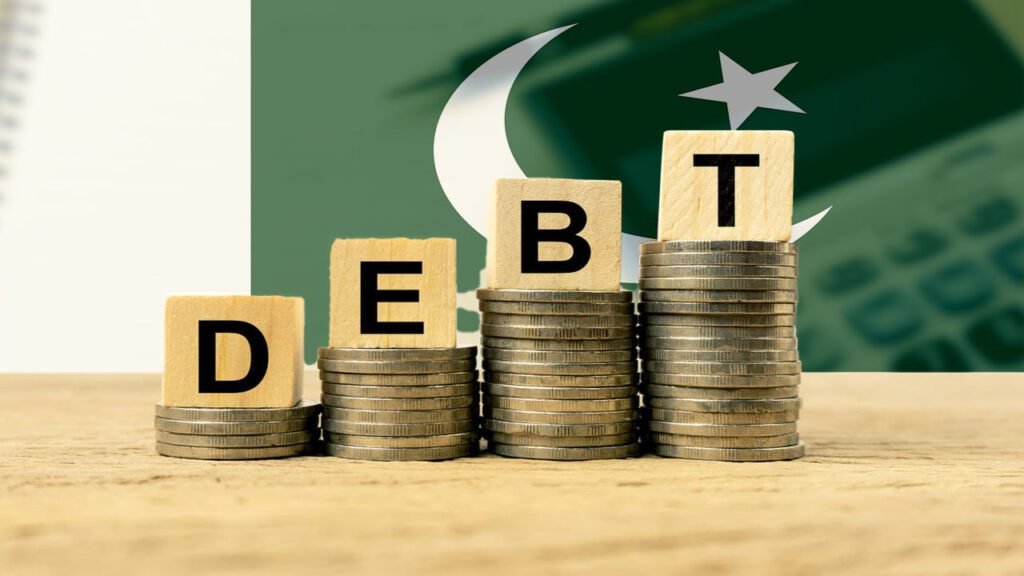
Pakistani banks have become the most exposed to sovereign debt globally, with government securities making up around 60 percent of their total assets—nearly four times the global average of 14.9 percent, according to a policy brief by the Karachi School of Business and Leadership.
The report highlights an increasingly concentrated financial structure in which banks are heavily financing the state as the government relies on domestic borrowing to cover persistent fiscal deficits. Pakistan’s public debt has risen sharply from Rs. 19.7 trillion in FY2016 to Rs. 80.5 trillion in FY2025, while domestic debt has reached Rs. 54.5 trillion. Scheduled banks alone hold roughly Rs. 36.8 trillion in government securities, representing about 79 percent of all marketable debt.
Banks continue to favor government paper because it offers attractive returns, carries zero risk weight under regulatory rules, and requires far less due diligence than private sector lending.
By contrast, lending to businesses is costlier and riskier, requiring capital provisioning and exposing banks to default risks. Small and medium enterprises face the greatest constraints due to weak financial records, limited collateral, and inconsistent credit histories.
This imbalance has significantly constrained private sector credit, which now stands at only around 11.5 percent of GDP—well below regional peers such as India and Bangladesh. SMEs receive less than 10 percent of total private credit despite their key role in employment generation and economic activity.
The report argues that heavy government borrowing from banks has effectively crowded out financing for entrepreneurs and businesses, reducing credit availability for productive investment.
At the same time, banks have become a major source of fiscal support for the government. However, after years of strong earnings from high-yield sovereign instruments, the sector has faced increased taxation, including higher corporate tax rates, a permanent super tax, and a one-time windfall levy. The effective tax burden on banking profits has reportedly risen to around 55 percent.
With banks deeply tied to sovereign financing, policymakers are now exploring alternative funding channels such as National Savings Schemes, Pakistan Stock Exchange-based sukuk auctions, Roshan Digital Accounts, Naya Pakistan Certificates, and the InvestPak platform. Despite these initiatives, the report notes that diversification remains limited, leaving Pakistan’s banking system more closely linked to government financing than most global peers.