



The federal government is now expected to present the FY2026-27 budget in parliament on June 10 or 12 after delaying the original schedule due to unresolved talks with the International Monetary Fund (IMF) and differences over provincial development spending.
The delay came after the postponement of the National Economic Council (NEC) meeting that had been scheduled for June 3. An official notification issued by the Cabinet Division confirmed that the meeting had been postponed, with a new date to be announced later.
The budget was initially expected to be unveiled on June 5, while the Pakistan Economic Survey 2025-26 was planned for June 4. However, the timetable was revised following a virtual meeting between Pakistani authorities and the IMF.
Officials said one of the main reasons for the delay was the Centre’s effort to convince provinces to align their higher development spending with broader national priorities, including defence and security needs.
Following the 7th National Finance Commission Award, the provinces’ share in national resources increased significantly. For FY2026-27, the combined provincial development outlay is projected at Rs. 3.138 trillion, with Punjab alone proposing Rs. 1.41 trillion. In contrast, the federal development budget has been restricted to Rs. 1.126 trillion, prompting internal discussions on how provinces can take on greater fiscal responsibility.
Another key issue is the lack of agreement with the IMF on revenue measures and expenditure cuts needed to achieve a primary surplus of 2 percent of GDP, or about Rs. 2.9 trillion, in the next fiscal year.
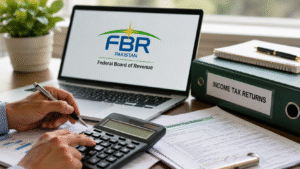
According to officials, the IMF has refused to lower the Federal Board of Revenue’s tax target for FY2026-27, which remains fixed at Rs. 15,264 billion. This comes despite the downward revision of the current fiscal year’s target from Rs. 13,979 billion to Rs. 13,428 billion for the year ending June 30, 2026.
Budget planners are facing added pressure because actual FBR collections for the outgoing year are now projected to remain around Rs. 13,000 billion. This means the tax machinery will have to generate an additional Rs. 2,264 billion next year to meet the IMF-backed goal.
Even with projected nominal growth of 12.2 percent, based on 4 percent real GDP growth and 8.2 percent inflation, tax collection is expected to reach only around Rs. 14,560 billion under normal circumstances. That would still leave a shortfall of nearly Rs. 700 billion.
Reports also suggest that the Gilgit-Baltistan legislative election may have contributed to the delay, although senior finance officials said the main reason remained the failure to finalize key budget figures both internally and with the IMF.
With critical fiscal issues still unresolved, the final date for the budget announcement has yet to be officially confirmed.