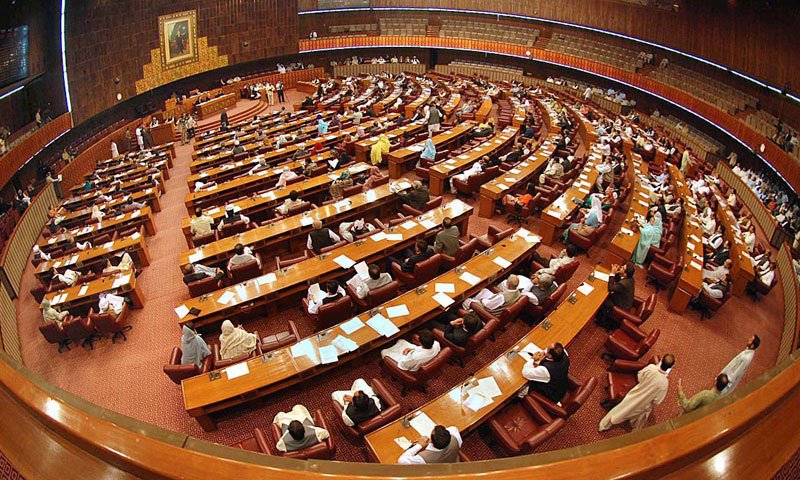
Pakistan’s National Assembly has formally introduced artificial intelligence into parliamentary operations, becoming the country’s first legislature to adopt an AI-enabled governance system following the launch of the AI Parliament module and an AI-enabled Speaker’s Office at Parliament House.
The initiative, developed by the National Information Technology Board, aims to modernise parliamentary functioning through artificial intelligence, secure digital infrastructure, and paperless administrative processes.
Speaking at the launch ceremony, Federal Minister for IT and Telecommunication Shaza Fatima Khawaja said the digital transformation aligns with Prime Minister Shehbaz Sharif’s nationwide push toward digitisation across government institutions. She noted that several ministries have already transitioned toward paperless workflows since the current administration assumed office.
The minister said the National Assembly had earlier implemented the e-Office system under Speaker Sardar Ayaz Sadiq and was now advancing further by integrating artificial intelligence into parliamentary operations.
According to officials, the AI system is designed to assist lawmakers with research, documentation management, and administrative efficiency while reducing reliance on printed material. Authorities highlighted that parliamentary proceedings traditionally generate large volumes of paperwork regardless of attendance, making digital systems essential for improving efficiency and transparency.
Shaza Fatima said Pakistan’s Parliament had previously established an SDG Secretariat and transitioned the National Assembly toward green energy usage, adding that AI adoption represents the next phase of institutional modernisation. She acknowledged that lawmakers may face initial adjustment challenges but said digital transformation would ultimately strengthen governance processes.
The minister also credited the NITB team, led by CEO Faisal Iqbal Ratyal, for implementing the project and confirmed that AI tools would gradually be expanded for use by all members of the National Assembly.
Speaker Ayaz Sadiq said technology adoption remains challenging for some lawmakers but emphasised that digital tools would simplify parliamentary work. He noted that paper consumption peaks during annual budget sessions when extensive printed documents are distributed to members.
Efforts are underway to introduce paperless budget proceedings, with future budget documents planned to be shared digitally through portable storage devices. The Speaker further announced that work on establishing a dedicated AI data centre for the National Assembly is expected to begin in July following budgetary approval.
Chairman of the National Assembly Standing Committee on IT Syed Amin Ul Haque described the development as a significant milestone, stating that the National Assembly had become the first legislative body in Pakistan to operationalise artificial intelligence in parliamentary functions.
He added that the initiative would benefit all parliamentarians and stressed the importance of building a dedicated parliamentary AI data centre. He also highlighted the Ministry of IT’s secure communication platform, Beep, as another step toward strengthening digital governance and protected communication among lawmakers.