




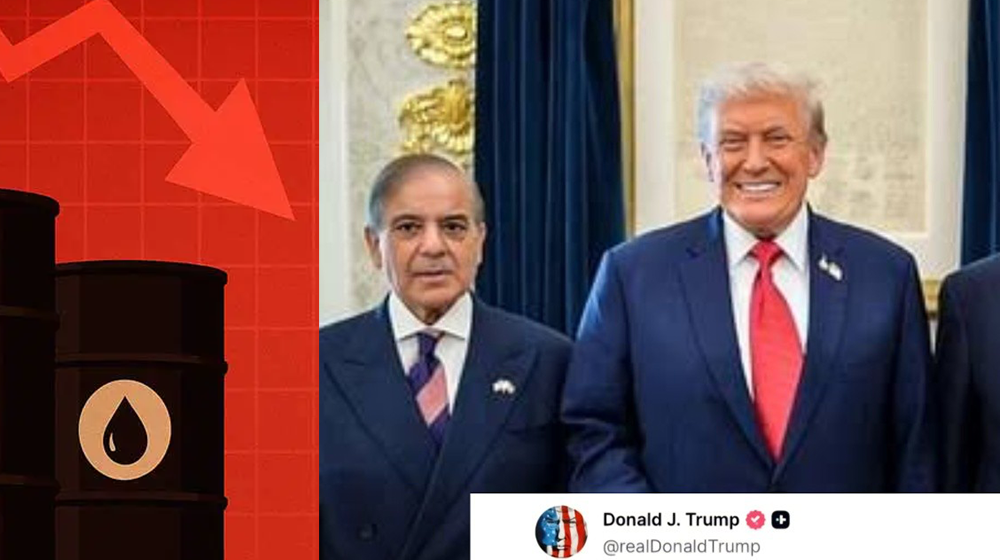
Global oil markets plunged sharply after the United States and Iran agreed to a temporary two-week ceasefire, easing fears of prolonged conflict in the Middle East and placing Pakistan at the centre of upcoming peace negotiations.
Brent crude futures trading on the Intercontinental Exchange (ICE) dropped nearly 16 percent, sliding to $91.72 per barrel from the previous session’s close of $109.27, as traders reacted to the sudden diplomatic breakthrough.
Ceasefire Sparks Market Relief
The sharp fall in oil prices followed confirmation that Washington and Tehran would halt military actions while negotiations move forward. The first round of talks aimed at ending the conflict is expected to take place in Islamabad, highlighting Pakistan’s growing diplomatic role in facilitating dialogue between the two sides.
Iran’s Foreign Minister Seyed Abbas Araghchi said Tehran would allow uninterrupted shipping through the strategically vital Strait of Hormuz during the ceasefire period. The announcement significantly reduced concerns about supply disruptions, which had earlier driven crude prices higher.
Trump Confirms Suspension of Attacks
US President Donald Trump announced that American forces would pause bombing operations against Iran for two weeks, describing the arrangement as a mutual ceasefire designed to create space for a long-term peace agreement.
According to Trump, both countries have already narrowed differences on several major issues, and the temporary halt in hostilities is intended to finalise a broader settlement framework.
Markets Turn Optimistic
Analysts say falling crude prices could provide immediate relief to global equities, particularly sectors sensitive to fuel costs.
Lower oil prices are generally positive for:
- Oil marketing and refining companies
- Airlines and transportation firms
- Chemical, paint, tyre, and plastics manufacturers
However, exploration and upstream energy companies may face pressure due to declining crude price realisations.
Market experts noted that investor sentiment has shifted toward a more constructive outlook, with expectations of renewed buying interest after weeks of geopolitical uncertainty weighed on markets.
Oil’s Big Influence on Earnings
Research firm Bernstein estimates that every $10 increase in crude prices above $90 per barrel can reduce benchmark index earnings by roughly 2–3 percent, underlining how closely stock market performance is tied to energy costs.
With Pakistan hosting the expected negotiations, investors are now watching whether the temporary ceasefire evolves into a lasting peace deal — a development that could stabilise global energy markets and reshape financial trends worldwide.