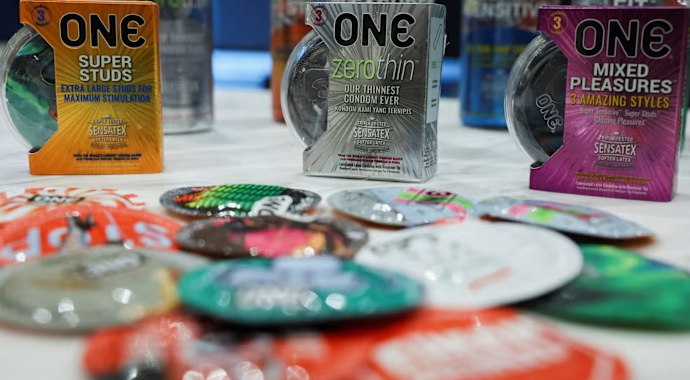
The world’s largest condom manufacturer has announced plans to increase prices across its product range by as much as 30 percent, citing rising production and logistics costs triggered by ongoing conflict in the Middle East.
Karex Berhad, a Malaysia-based company responsible for roughly one-fifth of global condom production, said disruptions linked to the closure of the Strait of Hormuz have significantly strained supply chains and driven up manufacturing expenses.
The company produces more than five billion condoms annually from facilities in Malaysia and Thailand, supplying major international brands such as Durex and Trojan, along with government health agencies including the National Health Service.
Chief executive Goh Miah Kiat said the escalation of geopolitical tensions caught manufacturers off guard, leaving little time to adapt to rapidly rising input costs. Prices of essential raw materials — including latex, synthetic rubber compounds, aluminium foil, and silicone oil used in packaging — have surged sharply, while shipping delays have further added to operational pressure.
According to the company, petroleum-based latex prices have climbed about 30 percent this year, while nitrile butadiene, another key synthetic material, has doubled in cost. Extended transit times and higher energy prices have compounded the financial strain.
Karex indicated that price adjustments would likely apply not only to condoms but also to related medical and healthcare products such as lubricating gels, catheters, examination probe covers, and rubber gloves.
Industry analysts say the situation highlights the wider economic ripple effects of disruptions to the Strait of Hormuz, a key maritime route through which nearly a third of the world’s seaborne oil supply passes. The bottleneck has affected global trade flows and contributed to shortages and cost increases across multiple industries.
Founded in 1988, Karex generates most of its revenue by manufacturing products for global brands, while also supplying large quantities to public health and family planning programmes. The company noted that demand from international aid initiatives had already weakened after reductions in US-funded global health programmes, adding further pressure to its business outlook.
Executives warned that elevated costs could persist if geopolitical instability continues, meaning consumers worldwide may soon feel the impact through higher retail prices.