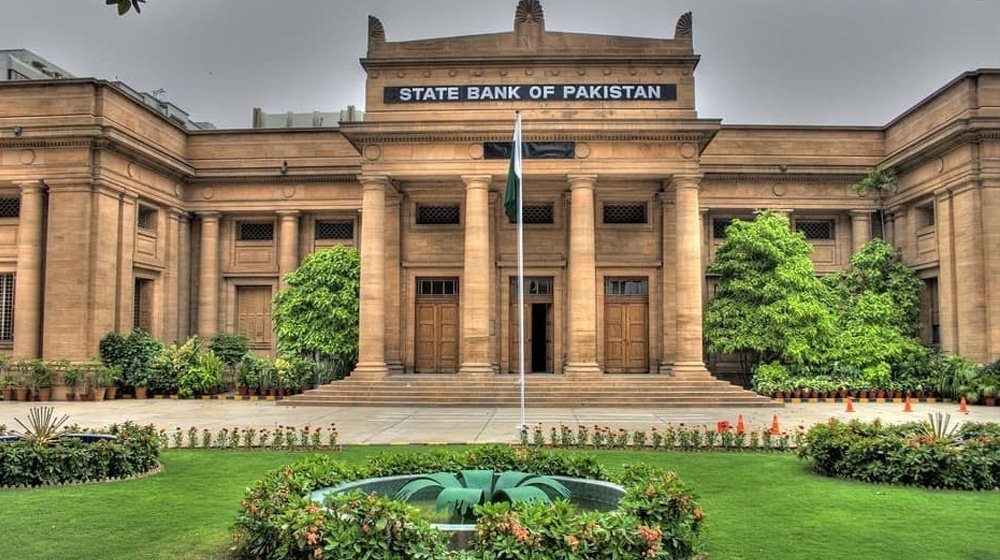
The State Bank of Pakistan (SBP) has increased its policy rate by 100 basis points, taking it to 11.5 percent, according to its latest monetary policy decision announced on Monday.
The move marks a return to monetary tightening after two consecutive policy meetings in which the central bank kept the benchmark rate unchanged.
With this increase, the SBP has shifted its stance once again amid ongoing inflation pressures and broader macroeconomic adjustments.
The Committee noted that the prolonged Middle East conflict has increased risks to Pakistan’s macroeconomic outlook. Global energy prices, freight costs, and insurance premiums remain well above pre-conflict levels, while ongoing supply chain disruptions continue to add uncertainty to the economic environment.
Although recent economic data has largely remained in line with expectations, the MPC assessed that the full impact of global developments will emerge in upcoming economic indicators. Against this backdrop, inflation is projected to rise and stay above the target range in the coming quarters. The Committee therefore decided to maintain a tighter monetary policy stance to anchor inflation expectations and limit second-round effects arising from supply-side shocks. Preserving macroeconomic stability remains essential for sustainable economic growth.
Since the previous meeting, several key developments were noted. Headline inflation increased to 7.3 percent in March, while core inflation rose slightly to 7.8 percent. Surveys showed weakening consumer and business confidence alongside higher inflation expectations. Real GDP growth reached 3.8 percent in the first half of FY26, compared with 1.9 percent during the same period last year. The current account recorded a modest surplus during July–March FY26. Despite sizable external debt repayments, SBP foreign exchange reserves stood at approximately $15.8 billion as of April 24, supported by Eurobond issuance following Pakistan’s return to international capital markets after more than four years. A staff-level agreement with the IMF was also reached on March 27, 2026.
The MPC emphasized that continued accumulation of external buffers and fiscal discipline has strengthened Pakistan’s starting position amid the current geopolitical shock compared with previous crises. The Committee reiterated the need for structural reforms to enhance external sector resilience and support long-term growth.
Real Sector
Real GDP growth was provisionally recorded at 3.9 percent in Q2-FY26, bringing overall growth in H1-FY26 to 3.8 percent. Economic activity improved broadly compared with last year, supported by strong large-scale manufacturing growth of 5.9 percent during July–February FY26. However, high-frequency indicators for industry and services showed some moderation in March.
Agricultural prospects weakened slightly due to lower-than-expected wheat output, according to initial estimates from the Federal Committee on Agriculture. Combined with expected spillover effects of the Middle East conflict on industrial and services activity in the final quarter, FY26 GDP growth is now likely to fall near the lower bound of earlier projections. Growth momentum may remain moderate in FY27, subject to risks related to the duration and intensity of the conflict.
External Sector
Current account surpluses recorded in February and March resulted in a small cumulative surplus during July–March FY26, largely supported by strong workers’ remittances. Despite deteriorating terms of trade, the FY26 current account balance is expected to remain near the lower end of earlier forecasts.
On the financing side, external inflows through bilateral arrangements and Eurobond issuance helped offset debt repayments and supported SBP reserves, which are projected to exceed $18 billion by June 2026. The MPC stressed the importance of further strengthening foreign exchange buffers amid global uncertainty.
Fiscal Sector
Federal Board of Revenue collections remained below target in March, widening the cumulative shortfall to Rs611 billion during July–March FY26. Nonetheless, available data indicates that the fiscal deficit remained contained through March.
Higher international oil prices have complicated fiscal management, requiring targeted subsidies to protect vulnerable groups. Achieving the planned primary surplus may require additional expenditure restraint. The MPC emphasized continued fiscal reforms, including broadening the tax base and reducing losses of state-owned enterprises, to improve fiscal sustainability.
Money and Credit
Broad money growth slowed to 14.5 percent as of April 10, down from 16.0 percent in February, mainly reflecting reduced government borrowing from the banking system. Private sector credit growth remained around 13 percent, supported by improving economic activity and the lagged impact of earlier monetary easing.
Credit expansion was observed across working capital, investment, and consumer financing, particularly in textiles, wholesale and retail trade, and chemicals. Rising consumer financing indicates improving household demand. Growth in currency in circulation and deposits has moderated since the last MPC meeting.
Inflation Outlook
Headline inflation increased to 7.3 percent in March, with core inflation rising to 7.8 percent. Even prior to the Middle East conflict, inflation was expected to move toward the upper limit of the target range due to base effects. The subsequent energy price shock has pushed fuel prices higher, with early spillover into transport costs and core inflation. Moderated food prices due to adequate supplies are expected to partly offset these pressures.
The MPC assessed that inflation could temporarily enter double-digit territory in the coming months before gradually easing. However, inflation is expected to remain above the 5–7 percent target range for most of FY27. The outlook remains sensitive to global energy prices, the duration of geopolitical tensions, and potential fiscal slippages.