



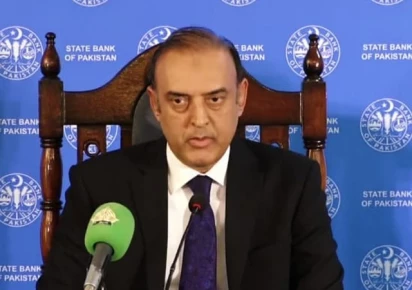
Pakistan’s economy is expected to grow by up to 4.5 percent in the current fiscal year as industrial activity, foreign exchange reserves and fiscal indicators show signs of improvement, according to the State Bank of Pakistan (SBP).
In its Annual Report on the State of Pakistan’s Economy for FY26, released on November 16, the central bank said Pakistan managed to maintain economic stability despite several domestic and international challenges.
These included changing US trade policies, monsoon floods and the Middle East conflict that erupted in late February 2026.
SBP attributed the improvement to tighter economic management, government efforts to reduce fiscal imbalances and reforms introduced under the IMF programme.
Economic Growth Outlook
The central bank has projected real GDP growth of 3.5 to 4.5 percent for FY27.
During FY26, economic activity gained momentum following a recovery in large-scale manufacturing. The improvement also benefited agriculture and services because of strong connections between these sectors.
Higher domestic economic activity increased demand for imports, while exports faced pressure from weak global economic conditions.
Despite this, Pakistan’s current account deficit remained limited to 0.1 percent of GDP in FY26, mainly due to strong workers’ remittances.
SBP also strengthened its foreign exchange position through market purchases of foreign currency and a reduction in forward liabilities. Official financial assistance, international bond issuances and inflows through Roshan Digital Accounts further supported foreign exchange reserves.
Inflation Expected to Return to Target Range
Inflation remained close to the upper limit of SBP’s medium-term target of 5 to 7 percent during FY26.
However, rising energy costs following the Middle East conflict pushed year-on-year inflation into double digits from April 2026.
SBP expects inflationary pressure to gradually ease during FY27, bringing inflation back towards the 5 to 7 percent target range.
The central bank said government spending controls and a significant reduction in interest payments also helped improve the fiscal position during FY26.
Current Account Deficit May Reach 1% of GDP
Pakistan’s current account deficit is projected to remain between zero and 1 percent of GDP in FY27.
Imports are expected to increase due to economic expansion, changes in import tariffs and higher international commodity prices. Exports, meanwhile, are expected to recover gradually as global demand improves and government incentives support exporters.
Continued growth in remittances is expected to help manage the country’s external financing requirements.
SBP also expects foreign exchange reserves to increase further, supported by the $3 billion raised through Eurobond issuance in September 2026, additional foreign currency purchases and expected official inflows.
These developments are expected to push reserves towards the equivalent of four months of imports.
SBP Says Pakistan Needs More Reforms
Despite improvements in economic indicators, SBP has stressed that Pakistan needs deeper structural reforms to achieve sustained economic growth and generate employment for its growing working-age population.
The central bank also warned that increasingly frequent climate-related disasters could threaten agricultural production and called for stronger measures to prepare for extreme weather events.
It further recommended expanding the use of solar energy in agriculture while ensuring that renewable energy development does not undermine food security or environmental sustainability.
According to the report, these measures could encourage domestic and foreign investment, create employment opportunities and reduce Pakistan’s dependence on vulnerable global supply chains.