



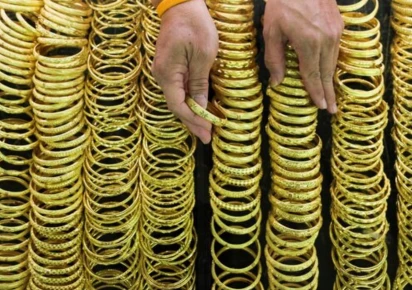
The Ministry of Commerce has moved to overhaul the country’s jewellery export regulations, proposing fixed dollar value addition rates to replace the percentage-based requirements that exporters say have become unworkable as global gold prices swing wildly.
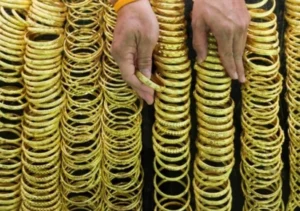
Under the proposed revision to SRO 760(I)/2013, the 2013 regulation governing imports and exports of precious metals and jewellery, exporters would be required to add $1.50 per gram to bangles and chains, $2 per gram to other plain jewellery, and $4 per gram to studded or embedded pieces. The fixed rates would displace the existing thresholds of 8 percent, 12 percent, and 13 percent, respectively.
The ministry has submitted the revised framework to the Economic Coordination Committee (ECC) of the Cabinet for approval, following consultations with government departments, industry representatives, and parliamentary stakeholders.
Why the Rules Are Changing
According to official documents, the current system — which pegs minimum value addition to international gold prices — has grown increasingly difficult for exporters to meet amid volatility in global gold prices and the dollar-rupee exchange rate. The ministry noted that the percentage-based mechanism has also fallen out of step with regional and international practices, driving up the compliance burden on exporters.
SRO 760(I)/2013, dated September 2, 2013, provides for Entrustment and Self Consignment Schemes designed to facilitate export-oriented jewellery manufacturing.
How the Review Unfolded
The regulatory review traces back to concerns raised by private sector stakeholders before the National Assembly Standing Committee on Commerce. On April 30, 2025, the Ministry of Commerce submitted a summary to the Federal Cabinet flagging exchange rate volatility, foreign exchange implications, limited value addition under existing schemes, and fragmented data across government agencies.
The government responded by suspending SRO 760(I)/2013 for 60 days and constituting a committee, chaired by the Secretary of Commerce, to review the framework, identify loopholes, and propose a more effective mechanism.
After multiple meetings and a review of the data, the committee found no discrepancies and recommended restoring the SRO. It also proposed automating procedures through integration with the Pakistan Single Window (PSW) and introducing amendments to streamline the framework. Those recommendations were endorsed by the Prime Minister’s Office and approved by the ECC on the basis of a summary dated October 16, 2025 — though the value addition requirements remained under review after further intervention by the National Assembly Standing Committee on Commerce.
Industry Split Over the Rates
At its meeting on February 4, 2026, the parliamentary committee directed the ministry to convene a joint stakeholder meeting and benchmark the value addition mechanism under SRO 760(I)/2013 against regional practices, including those of competing countries.
Consultations exposed a clear divide. Industry representatives argued that percentage-based requirements no longer reflected regional and international practice and pushed for fixed dollar amounts per gram. The Minister for Industries and Production, however, favoured retaining the percentage-based mechanism — leaving stakeholders at odds over the proposed changes.
At its September 3, 2026 meeting, the National Assembly Standing Committee on Commerce recommended that the Ministry of Commerce forward the agreed proposals on SRO 760(I)/2013 to the Cabinet for approval while resolving the outstanding issues.
The Ministry of Commerce has now placed the revised value addition rates before the ECC, seeking approval to fold the proposed changes into SRO 760(I)/2013.