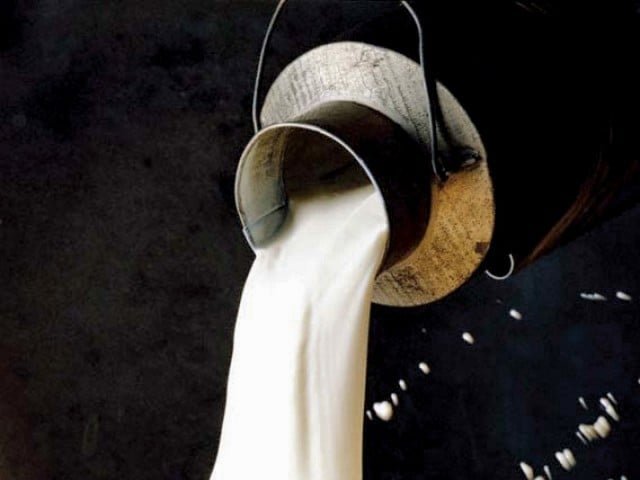
Pakistan’s dairy sector could generate nearly Rs. 500 billion in annual government revenue if its largely informal market is brought into the formal economy, according to the Pakistan Dairy Association.
Speaking at the Pakistan Agricultural Coalition’s Agri Connections Conference and Expo in Lahore, association Chairman Usman Zaheer Ahmed said Pakistan produces around 72 billion liters of milk annually, making it the world’s fourth largest milk producer.
He said formalizing and taxing even half of the informal dairy sector at a minimum rate of 5 percent could generate around Rs. 250 billion in annual government revenue, while bringing the sector’s full potential into the tax net could push the figure close to Rs. 500 billion.
Federal Minister for National Food Security Rana Tanveer Hussain said food security has now become a national security issue rather than simply an agricultural concern.
Speaking at the conference’s closing ceremony, he said agriculture contributes 26 percent to GDP and supports the livelihoods of more than 100 million people.
The minister said climate change is putting increasing pressure on farmers, with more frequent floods damaging crops and livestock while heat waves are becoming longer and arriving earlier.
He also highlighted the country’s worsening water availability, saying annual water availability per person has fallen from more than 5,600 cubic meters at independence to below 900 cubic meters today.
Tanveer said agriculture is a provincial subject, but food security is a national responsibility that requires collective action.
He called for stronger agricultural research, better access to finance, fair markets and consistent policies to support farmers.
At the conference, State Bank of Pakistan Deputy Governor Salimullah identified risk, inadequate insurance, limited accredited warehousing and restricted access to finance as major barriers to agricultural lending.
He said the State Bank is working on an ecosystem that would make agricultural lending and investment a more viable business opportunity for banks.
During a session on livestock investment, Omar Sagga, chairman of Jeddah-based meat trading company Taraf, said Gulf investors are showing interest in Pakistan’s meat processing sector. He said Pakistan has strong human capital and livestock resources, but investors need a reliable ecosystem before committing capital.
The conference also featured discussions on shrimp exports, agricultural investment opportunities, farm technology and mechanization.
Hello Tractor CEO Jehiel Oliver said the company is looking to expand agricultural mechanization in Pakistan by connecting farmers with machinery that has spare capacity rather than requiring every farmer to own equipment.
The conference concluded with PAC CEO Kazim Saeed presenting resolutions and a call for action on agriculture and food security.