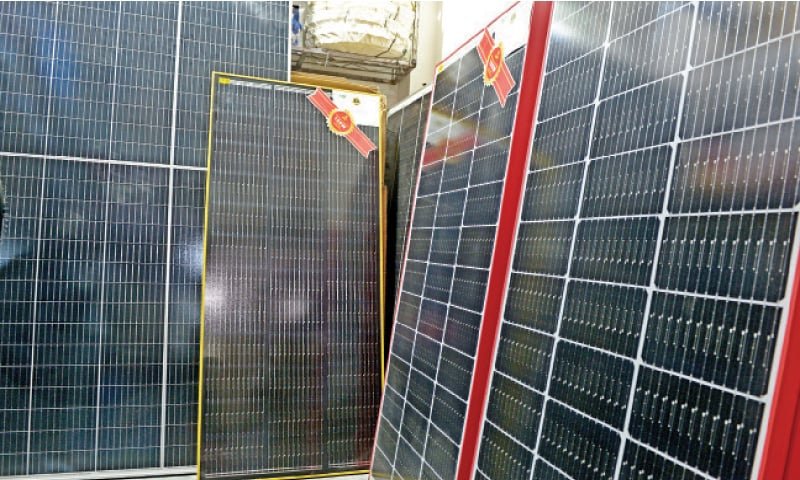
A new study has revealed a major gap in Pakistan’s power sector data, showing that the country’s actual rooftop solar capacity is significantly higher than official records indicate, raising concerns over grid planning and reliability.
The joint report by Pakistani AI startup HeraldX and energy think tank Renewables First, titled “The Uncounted Gigawatts: Distributed Solar Mapping and Grid Impact Analysis in Pakistan”, uses artificial intelligence and power system modelling to measure the real scale of distributed solar generation.
According to the study, Pakistan’s power grid is effectively operating with nearly double the rooftop solar capacity reflected in official data. Independent estimates place total distributed solar capacity at around 38GW, while official figures remain close to 20GW.
Lahore case highlights data gap
In a high solar-density area of Lahore, the AI model estimated 177MW of installed rooftop solar capacity, compared to an official estimate of 95MW. Researchers said the difference largely comes from systems installed outside formal net-metering records, making them invisible to planners despite directly affecting electricity flows.
Impact on the power grid
Using PSS/E simulation software, the study compared grid behaviour under official versus actual solar penetration levels.
Key findings include:
- Reverse power flow nearly doubled under real-world solar estimates
- Transformer loading increased from 34% to 76% during daytime
- Voltage levels exceeded Grid Code 2023 limits in both scenarios
The report warns that distribution networks are already experiencing conditions not fully captured in planning datasets.
A simulated 10MW battery storage system helped improve voltage stability and reduce reverse power flow, but also led to reduced power factor performance under lower solar conditions, suggesting storage alone cannot fully resolve system challenges.
Call for updated planning tools
The AI model developed by HeraldX was trained on Pakistan-specific rooftop imagery, allowing more accurate detection of solar installations compared to generic international models.
Researchers say the framework can be replicated across distribution companies if satellite imagery and network data are made available.
The study concludes that Pakistan’s electricity planning urgently needs updated and real-time solar tracking, as the gap between recorded and actual capacity continues to widen.
The full report is available from HeraldX and Renewables First for policymakers, regulators, and energy stakeholders.