



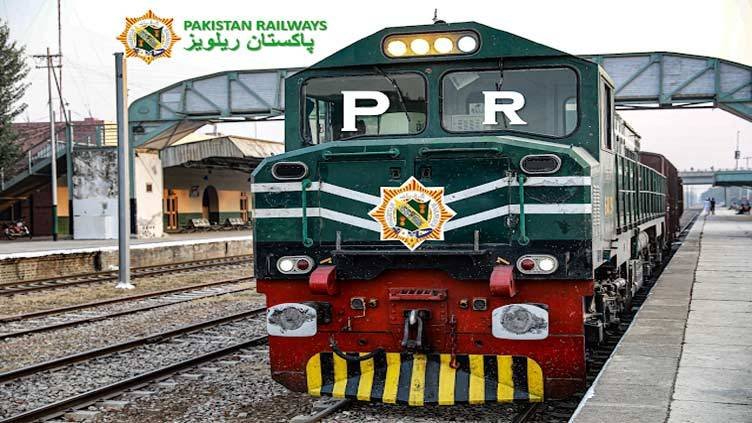
Planning Minister Ahsan Iqbal has pushed for the full modernization of Pakistan Railways’ Main Line-1 (ML-1), describing the route as an important part of the country’s plans to expand trade, freight movement and regional connectivity.
Speaking at the Development Partners Dialogue on “Advancing Trade, Tourism and Regional Competitiveness” in Mongolia, Iqbal outlined the government’s ML-1 modernization strategy and updated development partners on progress on the Karachi-Rohri section.
ML-1 runs 1,726 kilometers from Karachi to Peshawar and currently handles around 76 percent of Pakistan’s passenger traffic and 98 percent of freight traffic.
Under the proposed modernization, the railway’s capacity would increase from 34 to 120 train pairs, while passenger trains would be able to operate at speeds of up to 160 kilometers per hour.
Freight train speeds are also planned to rise from around 30 kilometers per hour to 80 kilometers per hour.
The upgrade is expected to significantly reduce travel time on the Karachi-Rohri section, bringing the journey down from around eight hours to approximately four and a half hours.
The government expects freight demand on the corridor to increase to around 21 million tons annually by 2035, making higher capacity a key requirement for future cargo movement.
The Karachi-Rohri section is estimated to cost around $2.5 billion and is currently the most advanced component of the ML-1 modernization program.
The Asian Development Bank is leading the financing effort, with the Asian Infrastructure Investment Bank, World Bank, Islamic Development Bank and European Investment Bank participating as co-financing partners.
Iqbal said financing for project preparation had been secured, engineering work completed and procurement and financing arrangements were moving forward.
The government is also working on a financing strategy for the remaining sections between Rohri and Peshawar.
According to the minister, the Karachi-Rohri project should serve as the starting point for the modernization of the complete Karachi-Peshawar corridor rather than being developed as an isolated project.
He stressed the need to maintain financing continuity and secure funding for the remaining sections so that ML-1 can eventually operate as a single, high-capacity railway corridor.