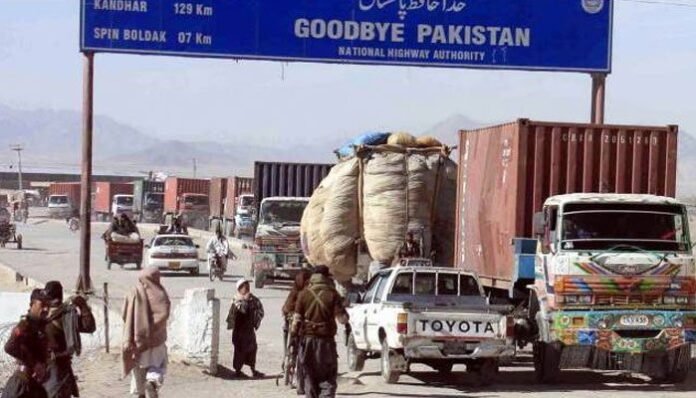
Pakistan has activated new westward trade corridors through China and Iran to reach Central Asian markets, signaling a strategic shift away from its long-standing dependence on Afghanistan as the main transit route.
Officials said the move follows years of disruption on Afghan trade routes, where security concerns, repeated border closures and rising transaction costs have made cross-border commerce increasingly unpredictable.
Under the new approach, Pakistan is using upgraded infrastructure through the Khunjerab Pass to connect with markets including Kazakhstan, Kyrgyzstan and Tajikistan. Authorities say the China-linked route offers shorter transit times and greater reliability for exporters and importers.
Pakistan has also operationalized a corridor through Iran after the opening of the Gabd-Rimdan border crossing. The first shipment has already moved toward Uzbekistan, according to officials. Although the Iran route is relatively longer, authorities say it provides more consistent operations, lower insurance costs and fewer interruptions than the Afghan route.
Officials now describe the China and Iran corridors as increasingly becoming Pakistan’s preferred trade channels for Central Asia rather than merely fallback options. The shift is being supported by broader infrastructure development, including transport upgrades under CPEC, the planned ML-1 railway modernization and efforts to position Gwadar Port as a regional trade hub.
While Pakistan is not completely abandoning trade through Afghanistan, officials indicated the route’s importance is likely to diminish unless operating conditions improve. Policymakers are now placing greater emphasis on stable, scalable and predictable connectivity as the country seeks to expand regional trade links.