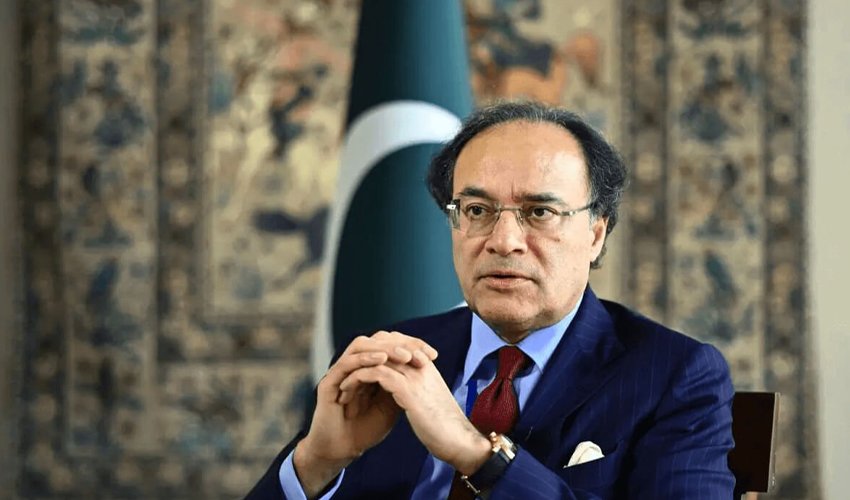
Pakistan plans to gradually reduce its reliance on commercial banks for government financing by widening access to state securities through a new digital investment platform, Finance Minister Muhammad Aurangzeb said on Monday.
Speaking at the launch of the State Bank of Pakistan’s InvestPak Portal, Aurangzeb said the platform marked the start of a new phase in broadening the government’s investor base and advancing the country’s digital transformation.
The InvestPak Portal is designed to digitize and simplify investment in government securities for both individual and corporate investors, giving a wider pool of buyers direct access to instruments that have traditionally been dominated by banks.
Aurangzeb said diversifying funding sources had become a policy priority as the government tries to ease pressure on the banking system and create more room for private-sector lending.
He said the issue of excessive government borrowing from banks had long been a concern, particularly because of its crowding-out effect on credit available to businesses.
Pakistan needs to move away from heavy dependence on commercial banks for budget financing over time so that lenders have both the capacity and incentive to expand loans to the private sector, he said.
Aurangzeb also urged non-bank financial institutions to play a greater role in financing government borrowing, saying their participation would make sense from both a business and asset-liability management perspective.
He said technology would be a key driver of financial inclusion by making investing faster, cheaper and more accessible, while helping democratize participation in financial markets.
The minister said Pakistan had seen a sharp increase in equity investor participation over the past 12 to 18 months, but fixed-income investment had lagged behind. The new platform, he said, is intended to help address that gap and support broader market development.
The move comes as Pakistan seeks to deepen domestic capital markets and rebalance the relationship between sovereign borrowing and private-sector credit, an issue that has long constrained economic activity.