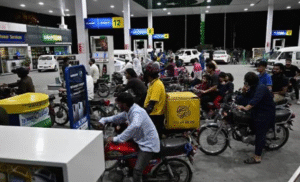




Pakistan’s petrol prices are being driven heavily by taxation, with consumers paying roughly Rs130 in taxes alone on every liter of petrol, according to detailed pricing documents that break down the components included in fuel costs.
The figures reveal that a large portion of the amount motorists pay at petrol pumps does not reflect the actual import price of fuel but consists of government levies, duties, transportation expenses, and industry margins built into the final retail rate.
Documents show that the total burden of taxes, levies, and operational margins on petrol reaches about Rs153.55 per liter. The biggest contributor is the petroleum levy, which stands at nearly Rs103.50 per liter, forming the backbone of government revenue collected through fuel sales.
In addition to the levy, authorities collect approximately Rs23.72 per liter as customs duty, while a Rs2.50 climate support levy is also charged under environmental financing measures. These charges significantly increase the retail price before the fuel even reaches consumers.
Distribution and business costs further push prices higher. Around Rs17.14 per liter is added as inland freight margin to cover transportation across the country. Oil marketing companies earn close to Rs7.87 per liter as profit, while petrol pump dealers receive about Rs8.64 per liter as commission.
Overall, taxes and related charges account for nearly 32 percent of the petrol price, highlighting the extent to which fiscal policy influences fuel costs alongside international oil prices and exchange rate movements.
Diesel pricing follows a similar structure, though the tax share is comparatively lower. Consumers pay roughly Rs116.46 per liter in combined duties, levies, and margins on diesel. This includes more than Rs51 per liter in customs duty, a petroleum levy of around Rs28.69 per liter, and the same Rs2.50 climate support levy applied to petrol.
Additional costs embedded in diesel prices include inland freight charges of about Rs4.37 per liter, oil marketing company profit near Rs7.87, and dealer commissions of roughly Rs8.64 per liter. Taxes account for about 21 percent of diesel prices overall.
The breakdown underscores how fuel has become a major source of government revenue collection, even as rising energy costs continue to affect transportation fares, food prices, and inflation across the country. Analysts say any future relief in petrol prices will depend not only on global oil markets but also on domestic taxation decisions shaping Pakistan’s fuel pricing structure.