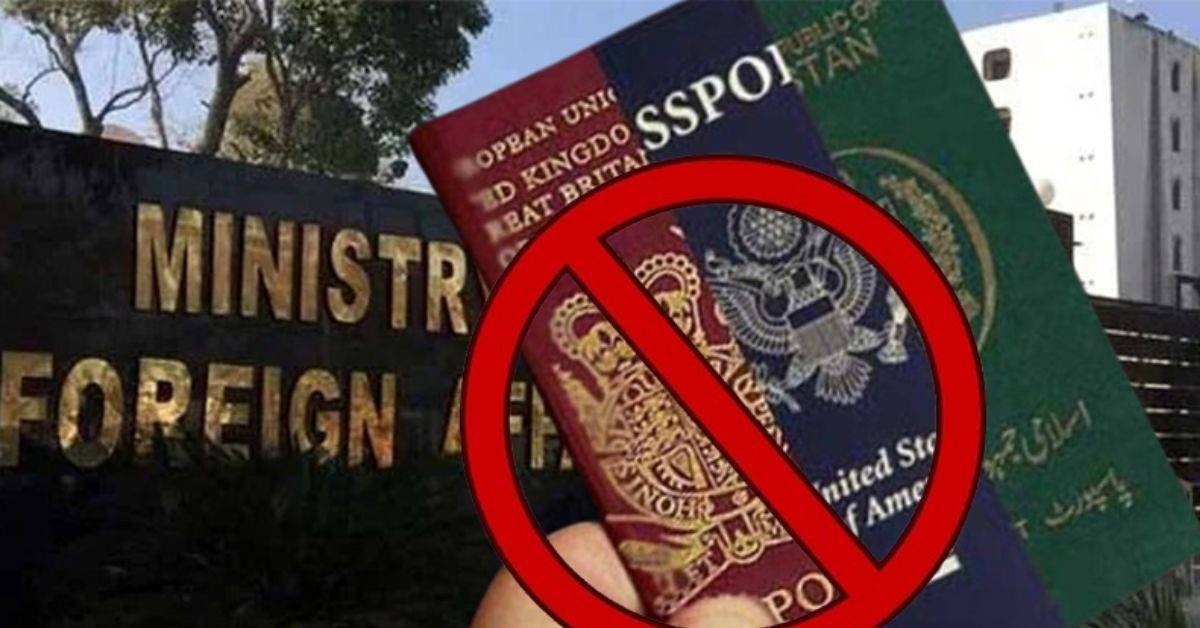
The federal government has introduced a new set of rules requiring civil servants to disclose any foreign citizenship, passports, residency status, or other foreign affiliations held by themselves, their spouses, or dependent children, in a move aimed at improving transparency and accountability in the bureaucracy.
Under the newly notified Civil Servants (Disclosure and Regulation of Foreign Nationality) Rules, 2026, approved by Prime Minister Shehbaz Sharif, all government employees will now have to submit such declarations at the time of appointment and update them every year.
Existing civil servants have been given 90 days to disclose whether they or their dependent family members hold any foreign citizenship or foreign travel documents.
The rules make it mandatory for officials to report foreign citizenship, foreign passports, permanent residency, immigration status, and other related affiliations. A centralized database of these disclosures will be maintained by the Establishment Division, while departments and cadre authorities will be responsible for keeping the records of their officers updated.
According to the notification, civil servants will not be allowed to acquire foreign citizenship or obtain foreign travel documents without prior approval from the competent authority. However, this restriction will not apply to those who hold foreign citizenship by birth or descent.
The government has also introduced strict penalties for those who fail to comply. Any officer found hiding foreign citizenship, foreign travel documents, or participation in immigration programmes may face departmental action. Non-disclosure of such information has been classified as misconduct under the Civil Servants Act, 1973.
The rules further state that if a government employee provides false information or submits an incorrect declaration regarding foreign citizenship, their appointment can be declared void from the beginning and terminated at any stage.
Authorities have also been directed to scrutinize and verify the disclosures submitted by serving officers as part of the new regulatory framework.