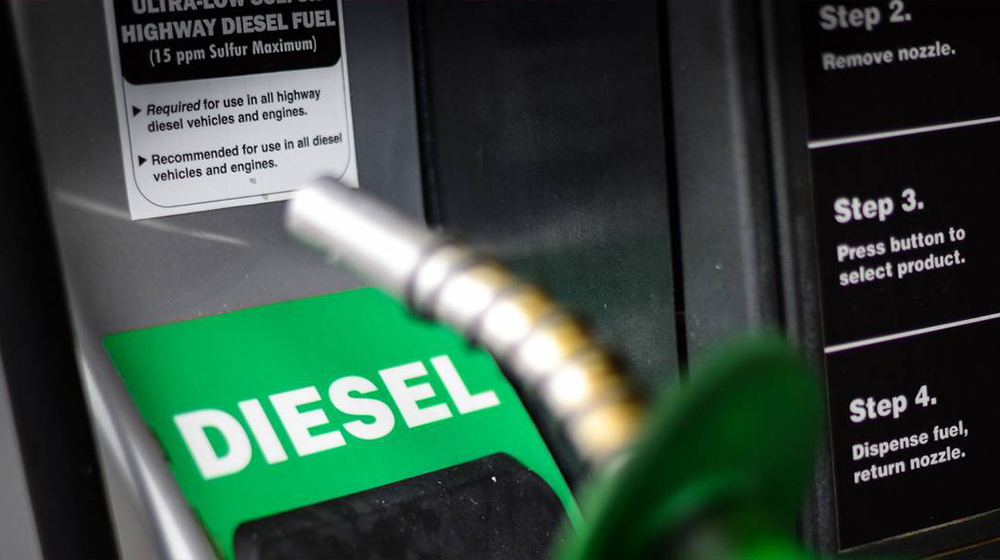
The federal government has imposed a fresh petroleum levy of Rs. 28.7 per litre on high-speed diesel, while slightly reducing the levy on petrol, in a late-night notification issued by the Ministry of Energy’s Petroleum Division effective May 1, 2026.
Under the revised rates, high-speed diesel (HSD) — which previously carried zero petroleum levy — will now be taxed at Rs. 28.69 per litre, marking a significant increase that is expected to raise transportation, agriculture, and logistics costs across the country.
In contrast, the petroleum levy on petrol has been reduced by Rs. 3.88 per litre, bringing it down from Rs. 107.38 to Rs. 103.50 per litre, offering limited relief mainly to private vehicle owners.
The notification also confirms that premium fuels such as HOBC and higher-octane motor spirit will continue to carry one of the highest levy burdens at Rs. 305.37 per litre, while superior kerosene oil has been fixed at Rs. 20.36 per litre and light diesel oil at Rs. 15.84 per litre. Furnace oil will remain subject to a petroleum levy equivalent to Rs. 77 per litre, reflecting the government’s continued reliance on fuel-based revenue measures.
Additionally, a Climate Support Levy of Rs. 2.50 per litre will apply to major fuels including petrol, high-speed diesel, premium gasoline, and furnace oil as part of the revised pricing framework.
Officials say petroleum levies have increasingly become a key source of government income because collections are automatic and difficult to evade, unlike traditional taxes collected through the Federal Board of Revenue (FBR). The move comes amid ongoing fiscal pressures and repeated challenges in meeting tax collection targets.
Economists warn that increasing diesel taxation could have wider inflationary consequences since diesel powers freight transport, agricultural machinery, and industrial supply chains. Higher diesel costs typically translate into rising food prices, transport fares, and overall business expenses, adding to inflationary pressure already building due to elevated global oil prices.
While the reduction in petrol levy may slightly ease costs for private motorists, analysts say the broader economic impact will depend largely on diesel pricing, which directly affects goods movement and essential commodity supply across Pakistan.