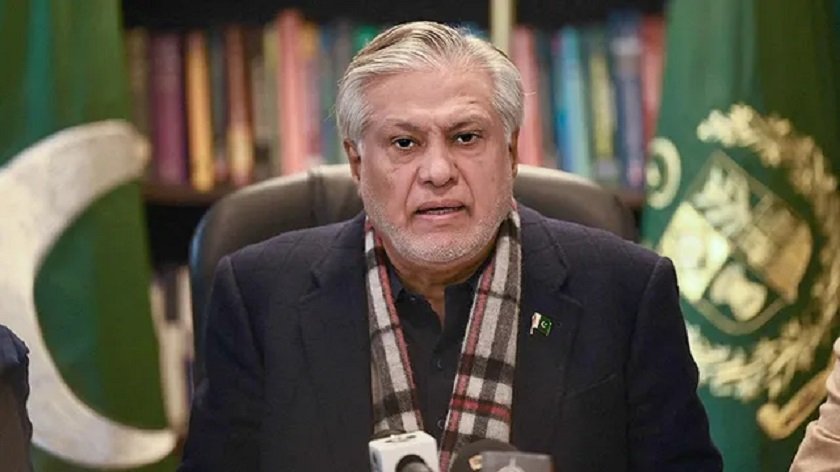
The federal government has shifted the responsibility for finalizing the federal budget to Deputy Prime Minister Ishaq Dar after finding the initial budget work unsatisfactory, while the International Monetary Fund has also started reviewing Pakistan’s proposed tax measures for the next fiscal year.
Prime Minister Shehbaz Sharif has constituted a committee headed by Dar to review, analyze, and finalize tax policy proposals prepared by the Tax Policy Office under the Finance Division, according to an official notification.
With the formation of the committee, the final decision on roughly Rs. 215 billion to Rs. 230 billion in new taxes, as well as any potential tax relief, has effectively been handed over to Dar. Finance Minister Muhammad Aurangzeb has been included in the committee as a member.
Under Pakistan’s agreement with the IMF, the government is required to introduce around Rs. 430 billion in budgetary measures for the upcoming fiscal year, including at least Rs. 215 billion in additional taxes and another Rs. 215 billion through enforcement actions.
The enforcement side has also been separated from the Finance Ministry’s direct control, with a second committee led by Minister for Economic Affairs Ahad Khan Cheema tasked with finalizing enforcement measures. The committee held its first meeting on Wednesday.
The move signals a major shift in budget-making authority, with key decisions now being taken outside the Finance Ministry. The government is expected to present the budget in the National Assembly soon after the Eid holidays once it is finalized in consultation with both the IMF and the newly formed committees.
Apart from Dar, the tax policy committee includes Ahad Cheema, Muhammad Aurangzeb, Planning Minister Ahsan Iqbal, Minister of State for Finance Bilal Azhar Kayani, Finance Secretary Imdad Ullah Bosal, FBR Chairman Rashid Mahmood Langrial, FBR member Hamid Atiq, Director General Tax Policy Office Dr. Najeeb, and chartered accountant Asim Zulfiqar.
The prime minister decided to form the committee after the Tax Policy Office failed to adequately justify its budget proposals in two separate briefings.
The committee has been tasked with reviewing the proposed tax measures in light of fiscal sustainability, economic growth, investment conditions, and revenue generation. It will also assess the legal, administrative, and operational feasibility of the proposals and evaluate their possible impact on industry, exports, inflation, investment, and the wider economy.