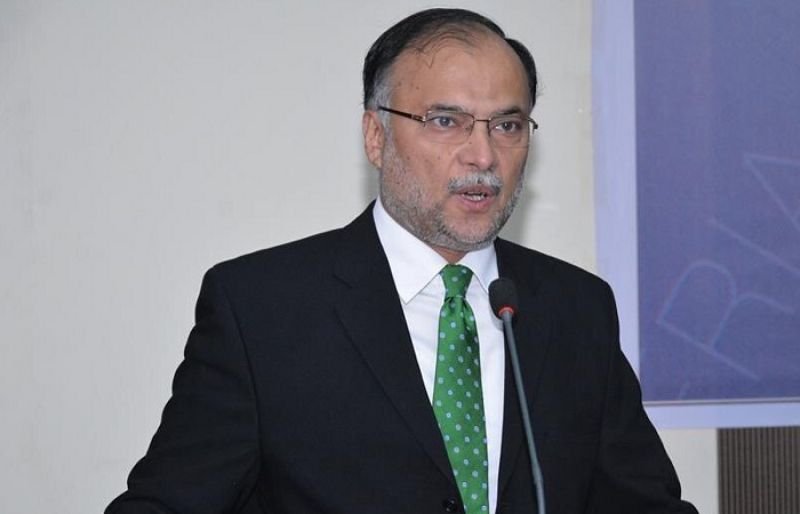
Planning Minister Ahsan Iqbal has said Pakistan’s youth could help turn the country into a $3 trillion economy by 2047, urging young people to focus on practical solutions, innovation and national development instead of losing hope over existing challenges.
Speaking at Quaid-i-Azam University in Islamabad, Iqbal said young people must take a leading role in shaping Pakistan’s economic future. He was addressing a ceremony marking the completion of 1,700 teams under the government’s Bano Shaheen Programme.
The minister said the establishment of 50 Bano Shaheen chapters at the university was an important step in involving students in national development. The Ministry of Planning has established chapters at more than 165 universities to bring young people’s ideas and priorities into development planning and policymaking.
Iqbal said the programme was designed to help students move beyond discussing problems and develop workable solutions. Participants will examine socioeconomic conditions in their communities, identify local challenges and propose measures to address them.
Drawing a comparison with the Pakistan Movement, the minister said the generation that achieved independence in 1947 had overcome major obstacles despite limited resources. He urged today’s youth to build on that legacy by using the country’s existing institutions, resources and opportunities.
Pakistan should aim for a major economic milestone when it completes 100 years of independence in 2047, Iqbal said. He added that reaching a $3 trillion economy would require consistent policies, effective implementation and an environment that allows talent and resources to deliver results.
The minister also questioned why Pakistan had struggled to maintain its development momentum, pointing to Vietnam’s export growth as an example of another country making economic progress. He said talent and natural resources alone could not guarantee success without sound policies and continuity.
Iqbal identified education and human development as key priorities. He said Pakistan needed to bring 25 million out-of-school children into classrooms and treat child malnutrition as a national emergency.
He also highlighted a scholarship programme offering 5,000 scholarships to young people from the country’s poorest districts, including Balochistan and the former Federally Administered Tribal Areas. Laptop distribution initiatives, he said, were intended to improve access to technology and modern education.
The minister further warned that fake news and misleading content were growing challenges in the age of artificial intelligence, big data and social media. He urged young people to verify information, think critically and communicate responsibly.
Iqbal called on the youth to contribute to Pakistan’s progress by prioritizing solutions, national service and economic development.