



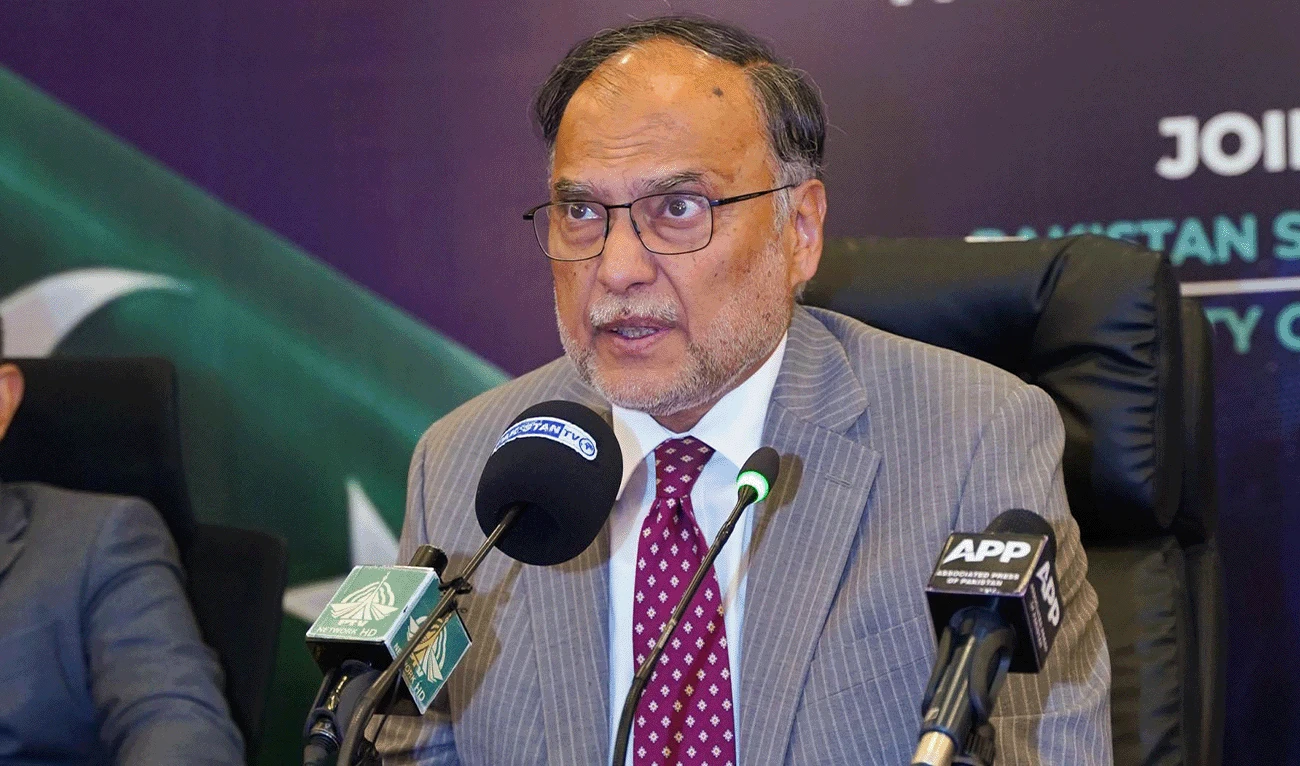
Federal Planning Minister Ahsan Iqbal has said that while political governments may change, the civil service remains a permanent part of the state, urging newly trained officers to play an active role in Pakistan’s long-term development.
He made these remarks at the closing ceremony of the 40th Senior Management Course at the National Institute of Public Administration (NIPA) in Islamabad on Friday. A total of 46 officers from different service groups completed the 16-week training program.
Iqbal said Pakistan’s progress depended on how effectively its public institutions responded to changing global conditions. He highlighted artificial intelligence and rapid technological advancements, stressing that government institutions needed to prepare for the changes ahead.
Using Nokia and BlackBerry as examples, the minister said organisations that fail to adapt to changing circumstances risk losing their relevance. He urged public institutions to learn from such examples and use emerging global trends to support national development.
He said Pakistan needed peace, security, political stability, policy continuity for at least 10 years and structural reforms to achieve sustainable economic growth.
Recalling the country’s economic trajectory, Iqbal said Pakistan was progressing under Vision 2025 in 2017, but political changes in 2018 disrupted that course. He said the country later faced serious economic challenges and came close to default in 2022.
The minister said Pakistan was now moving towards economic stability, with the government’s URAAN Pakistan framework setting a target of building a $1 trillion economy by 2035.
He warned that if the country failed to speed up reforms and development, its economy could reach only around $600 billion by 2035.
Iqbal said URAAN Pakistan was built around five key areas: exports, energy, environment, equity and E-Pakistan.
He stressed the need to increase exports to more than $100 billion by 2035, saying this would help strengthen the country’s economic independence. He also called for greater investment in education, healthcare and other social sectors to improve human resources and support long-term growth.
Addressing the newly trained officers, Iqbal said they should look beyond routine administrative duties and work towards improving public institutions and bringing meaningful changes to society.
He emphasised honesty, accountability and public service as essential principles of good governance. He also urged the officers to take guidance from the governance model of the Khulafa-e-Rashideen.
The minister later distributed completion certificates among the 46 officers and wished them success in their careers.