



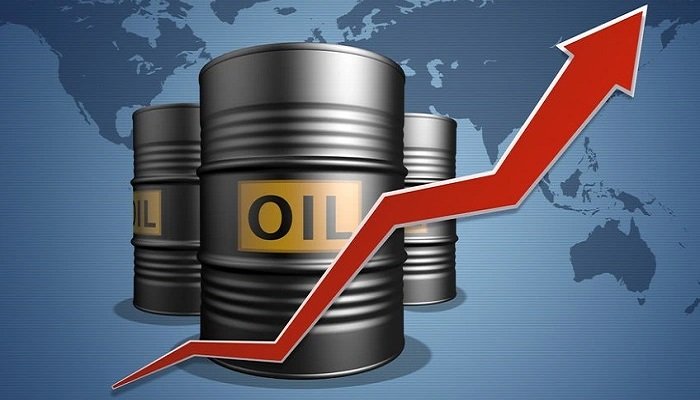
Global oil prices are hovering around $118 per barrel, with traders increasingly preparing for a possible surge towards $120 in November as fears of renewed fighting between the United States and Iran intensify.
Diplomatic efforts by Pakistan and Gulf countries, including Qatar, have so far failed to ease concerns about another escalation. Market participants are increasingly worried that hostilities could resume in the coming weeks.
Why Oil Prices Could Cross $120
The latest rally comes ahead of the US midterm elections, adding to uncertainty in energy markets. Brent crude, the global oil benchmark, traded above $116 per barrel last week as concerns about supply disruptions intensified.
Tensions have also increased around the Strait of Hormuz, one of the world’s most important oil shipping routes.
Iran’s Islamic Revolutionary Guard Corps (IRGC) claimed that three unidentified vessels struck naval mines, caught fire, and were abandoned after allegedly ignoring Iranian warnings and taking an unauthorised route.
The US Central Command (CENTCOM) disputed Iran’s claims, adding to uncertainty surrounding maritime security in the region.
How Governments and Oil Producers Are Responding
European governments are preparing to release 42 million barrels of strategic oil and fuel reserves over the next three months. Around half of the planned release will consist of diesel.
France plans to release 10 million barrels and expects the move to reduce fuel prices at petrol stations by €0.12 to €0.18 per litre within days.
Meanwhile, Saudi Aramco has reportedly begun offering discounted spot oil cargoes to European buyers for October and November deliveries. The move aims to maximise exports through Saudi Arabia’s Red Sea terminals and reduce dependence on shipments through the Strait of Hormuz.
Abu Dhabi’s ADNOC has also informed customers that its second pipeline to Fujairah, with a capacity of 1.5 million barrels per day, is expected to begin initial deliveries in early 2027.
The pipeline will provide another export route that bypasses the Strait of Hormuz.
What Higher Oil Prices Mean for Pakistan
Pakistan remains particularly exposed to international oil price movements because of its reliance on imported petroleum products and crude oil.
The country now revises fuel prices daily, allowing changes in international markets to feed into domestic pricing much faster than under the previous fortnightly system.
Petrol currently costs Rs. 377.91 per litre. A motorist consuming 40 litres monthly spends approximately Rs. 15,116 on petrol.
Every Rs. 1 per litre increase adds Rs. 40 to that monthly bill, while a Rs. 10 increase would raise the expense by Rs. 400.
The government has already intervened to prevent an increase in domestic prices. Under its latest arrangement, the petroleum levy on petrol was reduced from Rs. 80 to Rs. 65.29 per litre.
Local refineries were also directed to absorb an additional Rs. 14.71 per litre in import-related costs to help keep petrol prices unchanged.
However, if international oil prices approach $120 per barrel, maintaining this arrangement could become increasingly difficult.
Other Developments in Global Energy Markets
– Russia: Moscow plans to extend diesel export restrictions through January while providing separate quotas for shipments to the United States.
– Egypt: The country has purchased six fuel oil cargoes for November and December as higher LNG prices put pressure on its energy finances. Egypt has already spent 60 percent of its $10.1 billion LNG import budget for 2026/27.
– Libya: An armed group has again shut a valve on the Hamada-Zawiya pipeline, disrupting supplies to the country’s largest refinery, which has a processing capacity of 120,000 barrels per day.
– Asia: Rising freight costs from Europe have pushed fuel oil price spreads in Asian markets to record levels.
– Japan: Japan is expected to overtake China as the world’s largest LNG importer this year, with projected imports of 62 million tons against China’s expected 61 million tons.