



Pakistan has opposed any expansion of veto powers at the United Nations Security Council (UNSC), calling for the existing power to be abolished or strictly limited to make the body more democratic and effective.
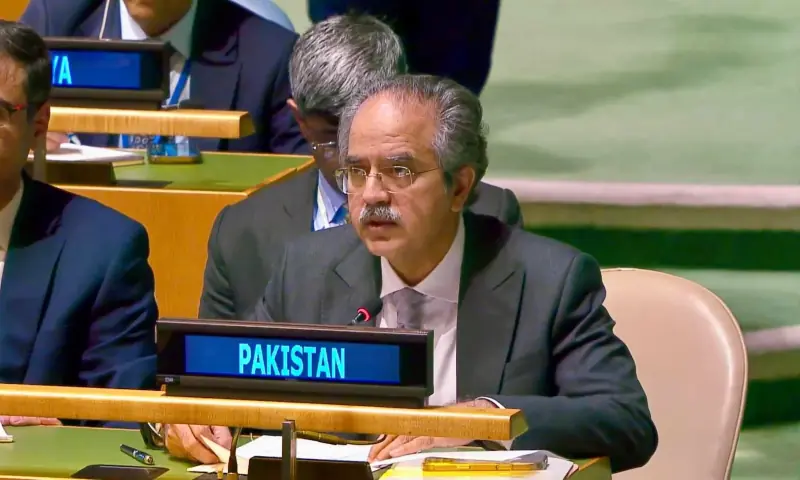
The position was presented by Gul Qaiser Sarwani, counsellor and political coordinator at Pakistan’s UN mission, during a debate at the United Nations General Assembly on the use of veto power.
Sarwani said the misuse of veto power undermines the Security Council’s effectiveness and damages the credibility of the United Nations. He argued that the five permanent members continue to exercise disproportionate influence over international decision-making.
The Security Council has 15 members, including five permanent members: the United States, Russia, China, France and the United Kingdom. These five countries can block substantive resolutions through their veto power, even when a proposal has broad support among other members.
Pakistan has warned that adding more permanent members or extending veto powers would deepen existing inequalities, preserve historical privileges and increase the risk of further deadlock.
The country also opposes creating new permanent seats for individual countries, a position it shares with the Uniting for Consensus group, led by Pakistan and Italy.
The group supports expanding the number and role of elected, non-permanent members instead. Pakistan believes this would improve representation and accountability while reducing the dominance of permanent members.
Sarwani said the veto should either be abolished or subjected to strict restrictions. He added that any measures to limit its use must comply with the relevant provisions of the UN Charter.
Pakistan also supports changes that would strengthen oversight of veto decisions and make the Security Council more representative, including increasing elected membership and reviewing the level of support required to approve resolutions.
The debate forms part of wider efforts to reform the Security Council, whose structure and decision-making powers have remained contentious among UN member states.