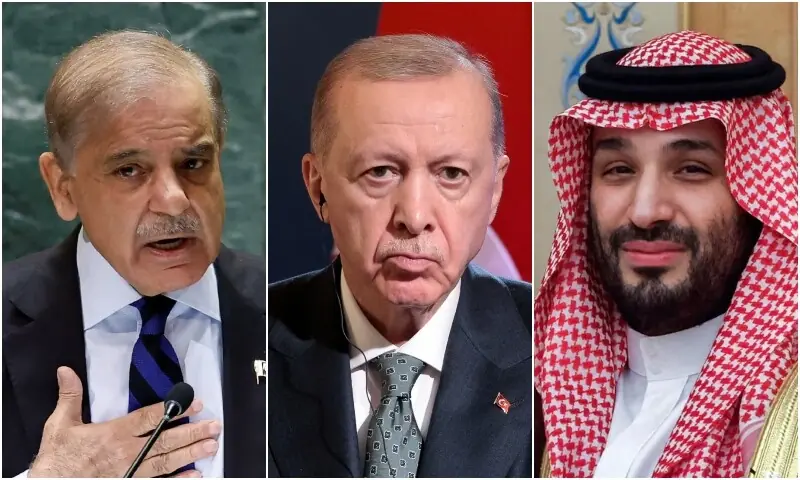
International oil prices moved higher after Pakistan, Türkiye, and Saudi Arabia announced a new defense cooperation agreement, with markets closely watching rising geopolitical risks in the Middle East and their potential impact on global energy supplies.
Brent crude climbed above $83 per barrel to trade around $83.80, while U.S. West Texas Intermediate (WTI) rose to $78.33 per barrel as investors priced in concerns over possible disruptions from the region, a key hub for global oil exports.
The increase followed an attack by Yemen’s Houthi movement in Saudi Arabia’s southern province of Najran, which killed 11 civilians, according to Saudi Arabia’s military coalition. The incident added to concerns about renewed threats to Saudi security and critical energy infrastructure.
Market sentiment was further affected by reports that Iran is considering restrictions on vessels from the United States, Israel, and other countries it considers hostile from passing through the Strait of Hormuz, one of the world’s most important oil transit routes. Reports also suggested Iran may impose transit fees on other commercial vessels using the waterway.
Reuters, citing a senior Saudi official, reported that Houthi forces and Iran-linked Iraqi groups were preparing possible coordinated attacks targeting Saudi civilian sites, including energy facilities and ports.
Concerns over oil supply routes have also increased after reports that Houthi forces targeted Saudi oil tankers in the Red Sea, with two vessels allegedly hit in recent days.
The latest market movement comes after earlier expectations that diplomatic progress could help restore oil flows through the Strait of Hormuz. However, renewed tensions between regional powers and uncertainty surrounding US-Iran relations have increased fears of further disruptions.
Analysts at ING said that while previous developments had raised hopes for easing tensions, growing distrust between Washington and Tehran could keep geopolitical risks elevated and continue supporting oil prices.