



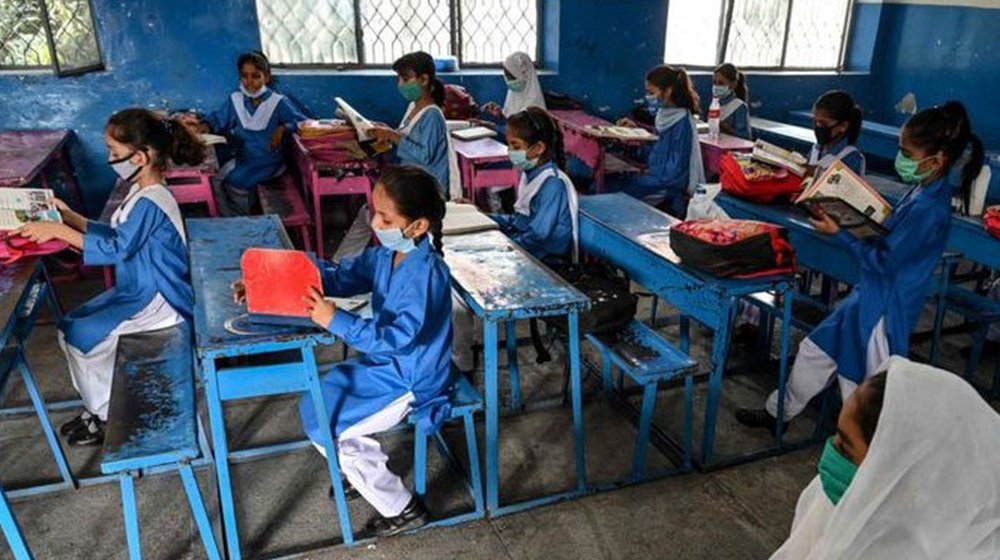
More than 25 million children in Pakistan remain out of school despite the federal government’s declaration of a national education emergency more than two years ago, according to a new policy review that blames the persistent crisis on chronic underfunding, weak governance, fragmented policymaking and poor implementation.
The findings are contained in a comparative review prepared by the Civil Services Academy, which said provinces have developed ambitious education roadmaps under the National Education Action Plan 2026, but the main challenge remains turning those plans into results on the ground.
Pakistan currently has between 25.1 million and 26 million out-of-school children, the report said, leaving the country with one of the world’s heaviest burdens of educational deprivation despite Article 25-A of the Constitution guaranteeing free and compulsory education.
The report said the crisis reflects decades of structural problems, including rapid population growth, widespread poverty, weak governance and consistently low public spending on education. It added that the country’s public education infrastructure has failed to keep pace with rising demand, contributing to the spread of low-cost private schools.
Punjab carries the largest share of the burden, with an estimated 9.6 million to 10.4 million out-of-school children, according to the report. A 2026 baseline assessment by the provincial school education department, cited in the study, found that 6.4 million children in the province have never enrolled in school, while another 3.16 million dropped out.
The figures show that keeping children in school is as serious a challenge as getting them enrolled in the first place.
The report also highlighted province-specific obstacles. Sindh continues to face high dropout rates after primary education as well as repeated climate-related disruptions. Khyber Pakhtunkhwa is dealing with insecurity, difficult terrain and a shortage of female teachers. In Balochistan, weak institutions, inactive schools and dispersed populations remain key barriers to access.
Although Islamabad, Gilgit-Baltistan and Azad Jammu and Kashmir have comparatively stronger enrollment rates, the report said inequalities remain within those regions as well.
The Civil Services Academy concluded that while the education emergency has helped bring political attention to the issue, Pakistan’s schooling crisis cannot be solved through a one-size-fits-all approach. It said the country will need stronger implementation, improved governance and sustained investment tailored to the distinct challenges faced by each province.