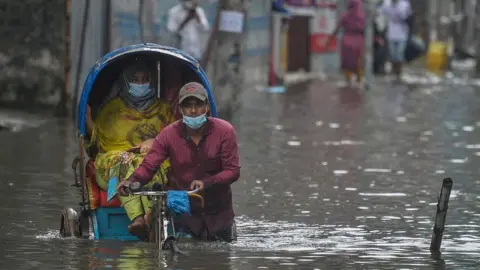
Climate change continues to pose one of the biggest threats to Pakistan’s economy, with the Economic Survey revealing that the 2025 floods caused an estimated Rs822 billion in damages and losses across the country.
According to the survey, more than 1,039 people lost their lives while over four million people were displaced during floods that affected all four provinces and Azad Jammu and Kashmir.
The report describes 2025 as Pakistan’s second warmest year in the past 65 years, with average national temperatures reaching 23.9 degrees Celsius and rainfall remaining below historical averages.
Government officials warn that extreme weather events are becoming increasingly frequent and severe, creating substantial economic and humanitarian challenges.
Agriculture, infrastructure, housing, and public services suffered extensive damage during the floods, placing additional pressure on public finances and slowing economic growth.
In response, Pakistan has intensified climate adaptation and resilience efforts. The survey highlights the Pakistan Climate Prosperity Plan, Green Taxonomy framework, Monsoon 2026 Strategic Plan, and multiple climate-financing initiatives.
The country also secured support under the IMF’s Resilience and Sustainability Facility and launched reforms including carbon levies and climate-risk management guidelines.
Several provinces have expanded environmental monitoring systems, pollution controls, renewable-energy programmes, and disaster preparedness measures.
The survey notes that despite contributing less than one percent of global greenhouse-gas emissions, Pakistan remains among the countries most vulnerable to climate impacts.
Officials stress that climate resilience is no longer solely an environmental issue but a central economic priority. The government argues that sustained investment in adaptation, infrastructure protection, and green development will be essential to reducing future economic losses and protecting livelihoods across the country.