




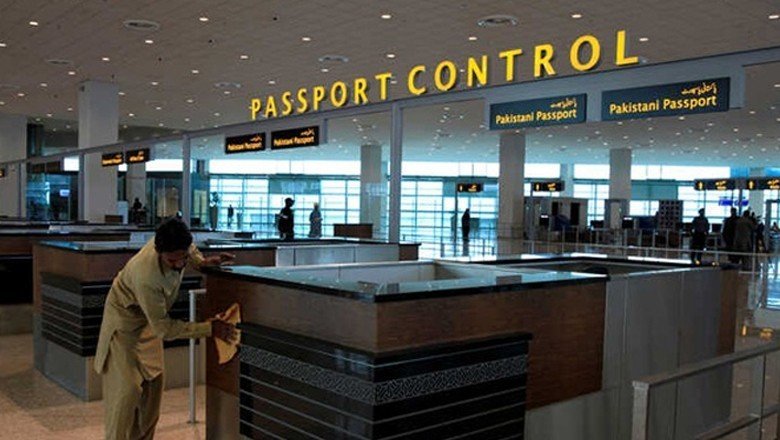
The Lahore High Court has issued guidelines to the Federal Investigation Agency on offloading passengers travelling abroad, ruling that citizens cannot be stopped from leaving the country merely on the basis of suspicion or vague reasons.
In a written nine-page judgment, Justice Raheel Kamran set aside the FIA’s decision to stop a citizen, Muhammad Abbas, from travelling to Nigeria despite the fact that he had valid travel documents, immigration clearance, and a boarding card.
According to the ruling, the petitioner challenged the offloading after he was prevented from boarding the flight at the last moment even though all his travel documents were in order. The petitioner told the court that the FIA stopped him only on the assumption that he might not return from Dubai.
The court noted that the petitioner was not involved in any criminal case or inquiry, and his name was not included in any blacklist or the Exit Control List. It observed that the offloading caused him financial loss, mental distress, and reputational harm.
The high court held that travelling abroad is a fundamental right protected under the Constitution. It said the FIA does have powers in such matters, but those powers are not unlimited and must be exercised transparently, fairly, and strictly in accordance with the law.
The judgment said recording reasons for offloading is not a mere formality but a legal requirement. It further observed that the petitioner’s explanation for travelling to Nigeria to visit his brother was not unreasonable, and that the FIA failed to record any sound reason for rejecting his explanation.
The court also ruled that a passenger holding a valid visa, ticket, and other travel documents cannot be offloaded unlawfully. It declared the FIA’s action against the petitioner null and void and said the affected citizen may approach the relevant forum if he wishes to seek damages.
Along with the ruling, the court issued fresh guidelines for FIA officials dealing with outbound passengers. It directed that officers must record detailed and meaningful reasons before offloading any traveller. The questions asked from the passenger and the answers given must also be documented.
The court further instructed that, where possible, the interview or conversation with the passenger should be preserved electronically. It also said that a copy of the offloading order or proforma must be provided to the affected passenger.
The judgment makes it clear that no citizen can be barred from foreign travel solely on the basis of apprehensions or vague grounds, setting a stricter legal standard for future FIA action at airports.