




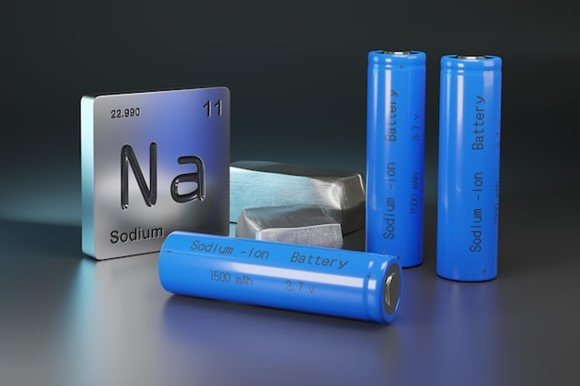
A research team at the National University of Singapore has developed a safer and longer-lasting solid-state sodium battery using a low-cost additive that improves ion transport and prevents internal damage during operation.
Sodium batteries are considered a promising alternative to lithium systems because sodium is widely available and cheaper. However, most current designs still rely on liquid electrolytes that pose safety risks, including leakage and flammability.
Solid polymer electrolytes improve safety but typically suffer from weak ion conductivity and poor stability against sodium metal electrodes. Over time, this leads to dendrite growth—metallic spikes that can pierce internal layers and cause battery failure.
To overcome these limitations, the researchers incorporated graphitic carbon nitride (GCN) into a polymer electrolyte composed of polyethylene oxide and sodium salt. The material is produced by heating urea at high temperature and is inexpensive to manufacture.
The team found that GCN helped restructure the polymer matrix, creating smoother pathways for sodium ions to move through the electrolyte. It also improved mechanical strength, making the system more resistant to internal stress and dendrite penetration.
Testing showed that ion conductivity increased significantly, while the efficiency of sodium-ion transport also improved, allowing more effective charge movement inside the battery.
The modified electrolyte formed a more uniform sodium deposition layer on the electrode surface, reducing uneven buildup that typically triggers short circuits. This greatly improved overall stability during repeated charging cycles.
In performance tests, standard polymer-based cells failed after roughly 250 hours under low current conditions. The upgraded version operated for more than 1,000 hours under similar conditions and surpassed 2,000 hours at higher current density without failure.
Full battery prototypes also maintained strong capacity retention after hundreds of cycles and achieved extremely high efficiency levels. A flexible version of the battery continued functioning even when bent and physically stressed, demonstrating improved durability.
Researchers say future work will focus on enabling efficient operation at room temperature and developing stacked cell designs to further increase energy density.