



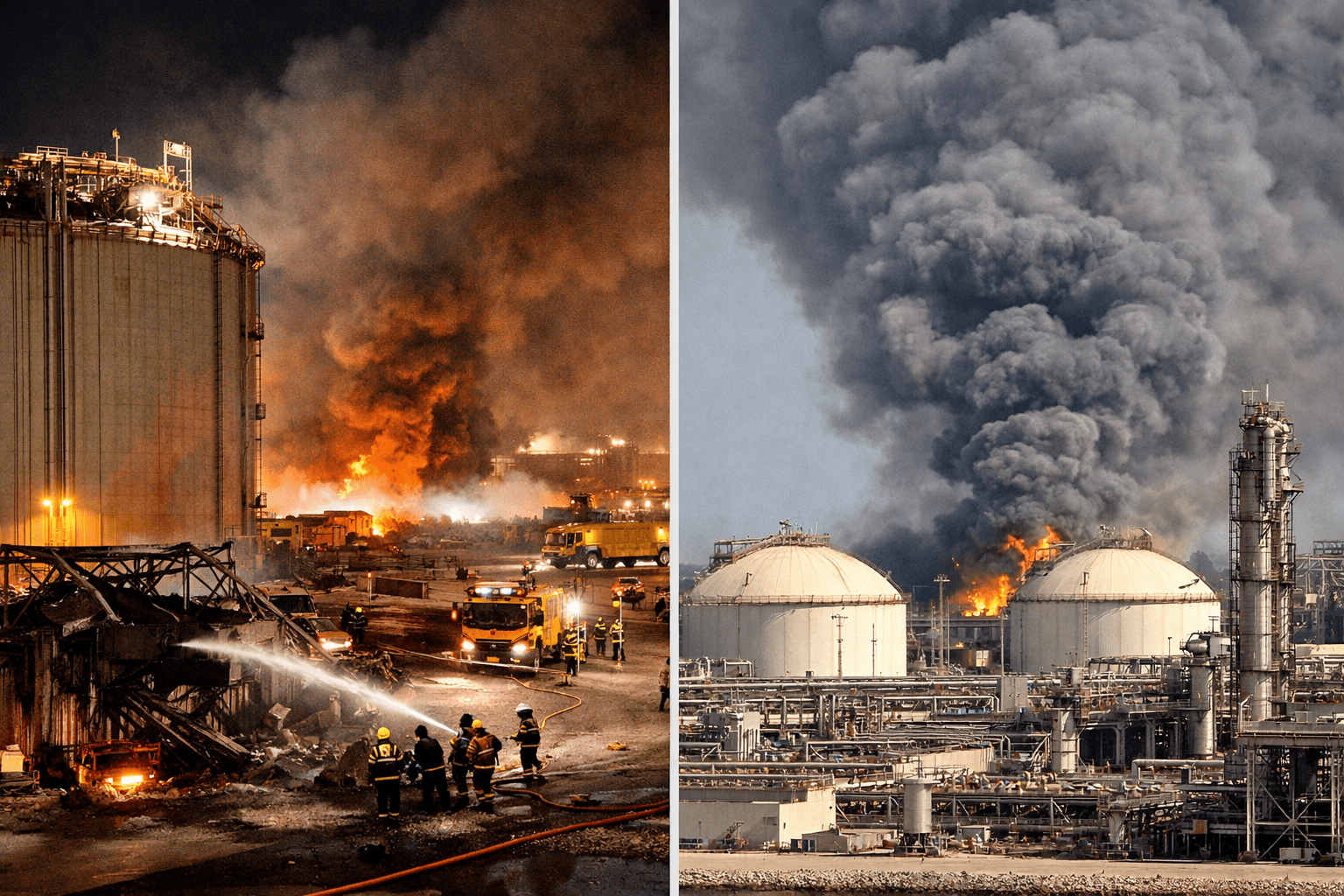
Iranian strikes have disabled around 17% of Qatar’s liquefied natural gas (LNG) export capacity, with disruptions expected to last between three and five years, according to QatarEnergy CEO Saad al-Kaabi.
The attacks damaged two of Qatar’s 14 LNG production trains and one of its two gas-to-liquids (GTL) facilities, removing approximately 12.8 million tonnes per year of LNG from global supply. The outage is projected to result in annual revenue losses of roughly $20 billion.
Kaabi said the scale and timing of the attack were unprecedented, noting the broader regional implications. The strikes followed Iranian retaliation targeting Gulf energy infrastructure after earlier attacks on its own gas facilities.
Due to the prolonged disruption, QatarEnergy is expected to declare force majeure on long-term LNG supply contracts, particularly affecting shipments to key markets including Italy, Belgium, South Korea, and China.
The impact extends beyond LNG. Condensate exports are expected to fall by about 24%, while liquefied petroleum gas (LPG) output may decline by 13%. Helium production is projected to drop 14%, with naphtha and sulphur output each expected to decrease by around 6%.
The damaged infrastructure, estimated to have cost $26 billion to develop, includes facilities in which ExxonMobil holds significant stakes—34% in one LNG train and 30% in another.
Qatar had earlier declared force majeure across its LNG output following initial strikes on the Ras Laffan industrial hub. Officials say production recovery will depend on a cessation of hostilities, with no immediate timeline for restoration.