



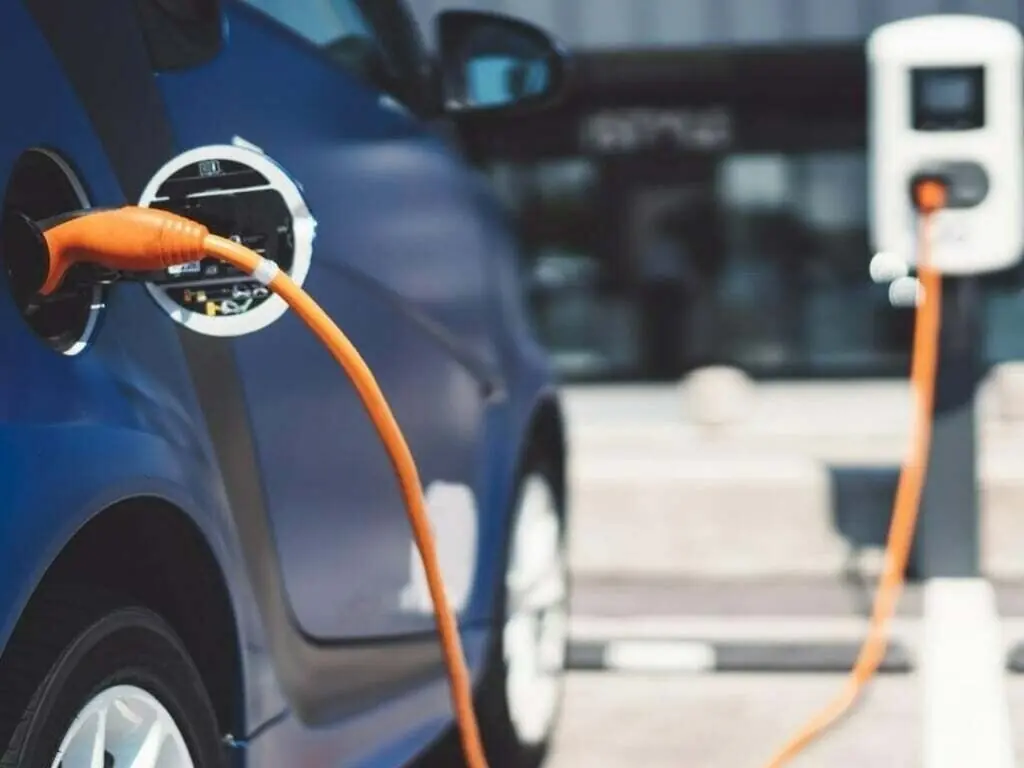
Pakistan State Oil (PSO) plans to establish more than 300 electric vehicle (EV) charging stations in major cities and along highways over the next two to three years as the country expands its charging infrastructure.
The company shared the plan during its corporate briefing on November 25, saying it considers EV charging a profitable business and intends to continue investing in the sector. However, PSO has not disclosed the estimated cost of setting up the charging network.
Alongside the EV expansion, PSO plans to invest between Rs. 1.5 billion and Rs. 1.8 billion in automating its supply chain and approximately 3,600 retail outlets to qualify for higher oil marketing company (OMC) margins approved by the government.
The digitization project is expected to be completed between March and June 2027. PSO management expects to receive part of the additional margin before the entire project is completed, with the full increase becoming available after meeting the government’s digitization requirements.
PSO Could Earn Billions Through Higher Fuel Margins
The OMC margin on petrol and diesel has remained at Rs. 7.87 per litre since October 2023, when it was increased from Rs. 6 per litre.
On December 9, 2025, the Economic Coordination Committee (ECC) approved another increase of Rs. 1.22 per litre. Half of the increase was scheduled to take effect from December 15, 2025, while the remaining portion was linked to digitization targets.
The federal cabinet subsequently made the entire increase conditional on 100 percent digitization of the petroleum supply chain. However, the additional Rs. 1.22 per litre has yet to be notified.
PSO sold 1.539 million tonnes of petrol and 1.532 million tonnes of diesel during the first half of FY26. Based on standard fuel densities, these sales represent approximately 3.9 billion litres over six months, translating into an annualised volume of around 7.8 billion litres.
At the proposed additional margin of Rs. 1.22 per litre, the increase could generate approximately Rs. 9.5 billion in additional annual revenue for PSO before taxes, based on these sales volumes.
This potential increase in revenue could help the company recover its planned investment in supply chain automation.
More Than 300 EV Chargers Planned for Cities and Highways
PSO’s charging network would represent a significant expansion of Pakistan’s existing public EV infrastructure.
The country had an estimated 30 to 50 public EV charging stations in May 2026. Meanwhile, the National Electric Vehicle Policy 2025-30 targets 3,000 charging stations nationwide by 2030.
The policy also envisages 40 fast-charging stations along motorways, positioned at intervals of approximately 105 kilometres.
Oil marketing companies are also required to install EV chargers at 10 percent of their retail outlets. With approximately 3,600 fuel stations, PSO would need charging facilities at around 360 locations to meet this requirement.
Its plan to establish more than 300 charging stations is therefore close to the number implied by the policy’s target.
PSO Faces Working Capital and Liquidity Pressures
PSO’s expansion plans come as the company continues to manage substantial working capital requirements and outstanding receivables.
The company reported total assets of Rs. 998.8 billion, equity of Rs. 257.1 billion and cash holdings of Rs. 75.3 billion as of December 31, 2025.
Its planned investment of up to Rs. 1.8 billion in automation represents approximately 0.7 percent of its equity and 2.4 percent of its cash holdings.
However, borrowings increased 8 percent to Rs. 384.3 billion in FY26, with management attributing the rise to higher petroleum product prices and working capital requirements. Around 70 percent of its short-term borrowing is foreign.
PSO’s trade receivables stood at Rs. 414.8 billion as of June 30, 2026, while its circular debt receivables also remain a significant financial concern.